Industrial processing sites and public utility districts face escalating demands to conserve natural reserves while improving effluent standards. Implementing MBR wastewater treatment has become the preferred operational path for modern facilities aiming to achieve high-volume water reclamation and closed-loop liquid management. Unlike legacy treatment configurations, modern MBR wastewater treatment integrates biological breakdown with submerged ultrafiltration membrane modules, generating ultra-pure permeate suitable for direct manufacturing recycling. Adopting MBR wastewater treatment enables commercial entities to reclaim valuable water assets, lower overall discharge volumes, minimize environmental penalties, and secure full environmental compliance across varying production schedules.
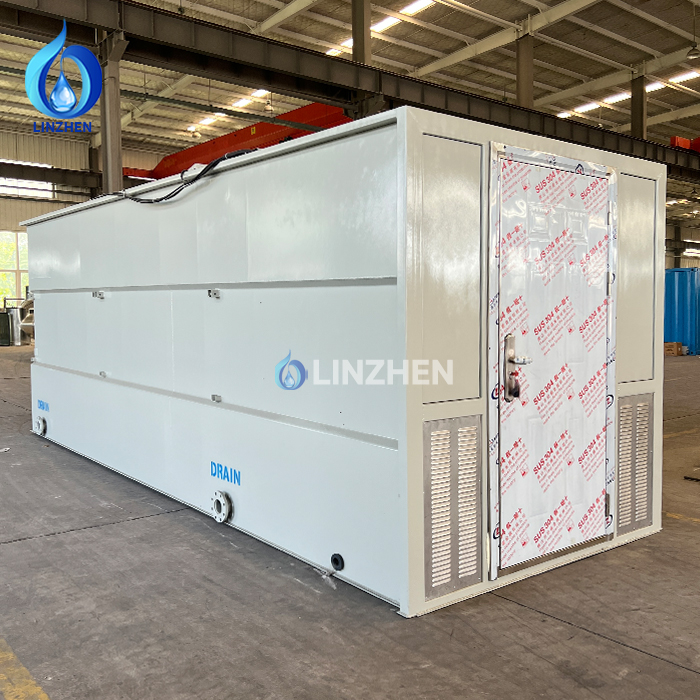
Investing in commercial MBR wastewater treatment delivers long-term technical resilience, financial efficiency, and strategic resource autonomy. Operations utilizing advanced MBR wastewater treatment benefit from superior permeate quality, smaller physical footprints, simplified operational workflows, and lower biological sludge handling expenses. This guide details why MBR wastewater treatment serves as the primary technical choice for facilities committed to enterprise water stewardship, regulatory risk management, and long-term sustainability goals.
Advanced Filtration and Water Purity Standards
Achieving Superior Effluent Purity with MBR Wastewater Treatment
Modern MBR wastewater treatment relies on hollow-fiber or flat-sheet membrane pore sizes that establish an absolute physical barrier against bacteria, suspended solids, micro-pollutants, and colloidal matter. Combining active biomass digestion with physical barrier separation ensures that MBR wastewater treatment outputs water with minimal turbidity and negligible pathogen counts. Facilities running MBR wastewater treatment routinely reach high-purity recycling standards without installing additional tertiary polishing units like media filters. The membrane barrier within an MBR wastewater treatment configuration provides continuous quality assurance for demanding industrial reuse loops, boiler feed applications, and cooling tower makeup streams.
Meeting Strict Environmental Permits via MBR Wastewater Treatment
Environmental protection agencies consistently tighten discharge regulations for municipal and industrial operators across global jurisdictions. Utilizing MBR wastewater treatment allows plants to clear strict regulatory thresholds by removing complex organic compounds, nitrogen, phosphorus, and microscopic contaminants that traditional secondary clarifiers fail to capture. The proven consistency of MBR wastewater treatment makes it perfect for non-potable applications like purple-pipe systems, toilet flushing, and agricultural irrigation. Facilities operating MBR wastewater treatment maintain comfortable safety margins above baseline compliance levels, effectively future-proofing their utility infrastructure against evolving legal restrictions.
Footprint Minimization and Operational Savings
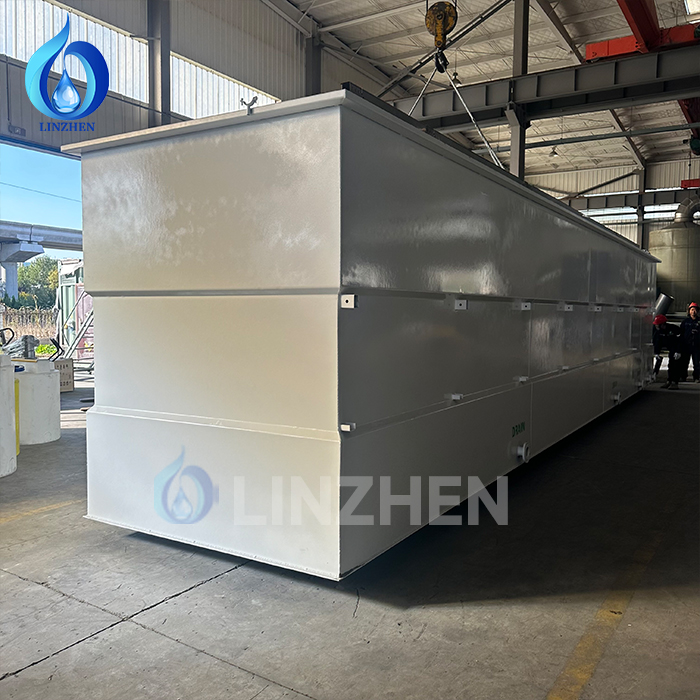
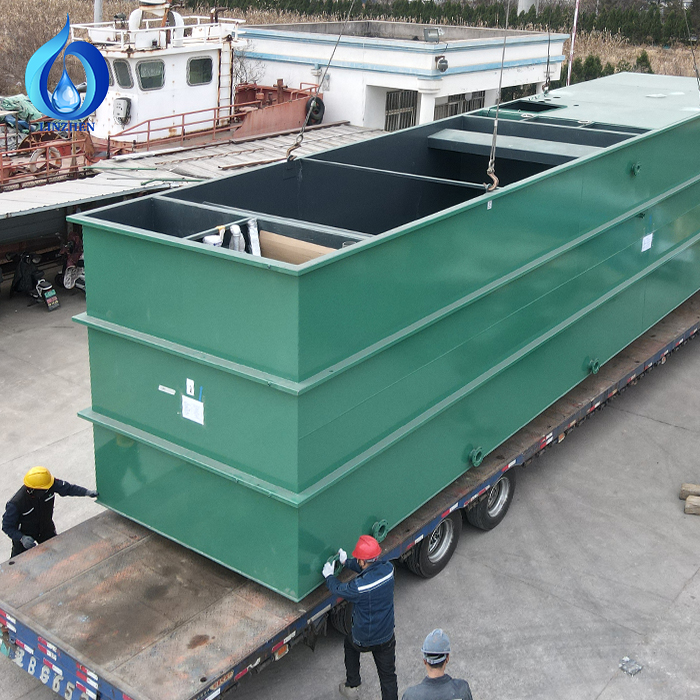
Compact System Layout of MBR Wastewater Treatment Equipment
Spatial constraints frequently restrict infrastructure expansion projects at congested manufacturing sites and urban municipal facilities. Deploying MBR wastewater treatment requires up to 50 percent less land area than traditional activated sludge systems because membranes eliminate secondary settling tanks and bulky gravity clarifiers. Plants upgrading to MBR wastewater treatment often repurpose existing concrete aeration basins rather than acquiring expensive surrounding land. The space-saving design of MBR wastewater treatment makes it ideal for brownfield redevelopments, urban utility upgrades, and industrial parks with restricted physical footprint boundaries.
Sludge Minimization and Lifecycle Savings in MBR Wastewater Treatment
Operating at elevated mixed liquor suspended solids (MLSS) concentrations allows MBR wastewater treatment to extend solids retention time, improving biomass digestion and organic loading capabilities. This biological mechanism in MBR wastewater treatment reduces total waste sludge yield, significantly lowering dewatering, transport, handling, and landfill disposal fees. Organizations specifying MBR wastewater treatment offset initial capital expenditures through continuous operational savings within five to seven years. The financial advantages of MBR wastewater treatment persist throughout the system service life, vastly outbalancing routine membrane cleaning and periodic replacement expenses.
Resource Recovery and Environmental Performance
Maximizing Reclaimed Water Volume with MBR Wastewater Treatment
Rising municipal water intake rates, groundwater extraction quotas, and regional droughts threaten continuous operational productivity. Deploying MBR wastewater treatment empowers manufacturing facilities to recycle 85 to 95 percent of their total influent volume for internal process reuse. High recovery efficiency through MBR wastewater treatment reduces corporate reliance on external utility grids and insulates operations from municipal supply cutbacks or seasonal water restrictions. Plants equipped with MBR wastewater treatment maintain operational independence, reduce freshwater purchasing costs, and lower their environmental footprint during severe drought periods.
Supporting Circular Economy Goals through MBR Wastewater Treatment
By converting raw industrial waste into a high-value reusable utility, MBR wastewater treatment directly advances corporate circular economy objectives and Environmental, Social, and Governance (ESG) benchmarks. Manufacturing plants utilizing MBR wastewater treatment convert environmental compliance obligations into active resource recovery channels, dramatically lowering utility overhead. The sustainable resource recovery realized via MBR wastewater treatment enhances brand value, satisfies investor sustainability criteria, and minimizes total environmental discharge impacts across the entire facility ecosystem.
FAQ
Why does MBR wastewater treatment outperform conventional treatment plants?
MBR wastewater treatment integrates biological degradation with membrane filtration in a unified step, completely bypassing secondary clarifiers. This streamlined setup generates clearer permeate with significantly lower pathogens and suspended solids, making MBR wastewater treatment superior for high-efficiency water recycling.
How much physical space can facilities save by installing MBR wastewater treatment?
An MBR wastewater treatment installation typically cuts required footprint by 30 to 50 percent compared to conventional systems. Replacing heavy clarifiers and media filters with compact membrane modules enables treatment capacity expansion within extremely tight site constraints.
Which industrial sectors gain the highest ROI from MBR wastewater treatment?
Facilities handling heavy water loads—such as food processing plants, pharmaceutical manufacturers, textile mills, semiconductor fabs, and municipal reuse centers—gain maximum financial returns from MBR wastewater treatment through reduced freshwater purchases and substantial discharge fee savings.
 EN
EN