Municipal and industrial wastewater treatment plants are under constant pressure to cut costs. Selecting the right sludge dewatering machine directly impacts long-term facility expenditure. Energy consumption represents a huge portion of sludge management costs, and your chosen sludge dewatering machine determines total electrical draw. Understanding how each sludge dewatering machine performs under load helps operators choose the ideal sludge dewatering machine for their site.
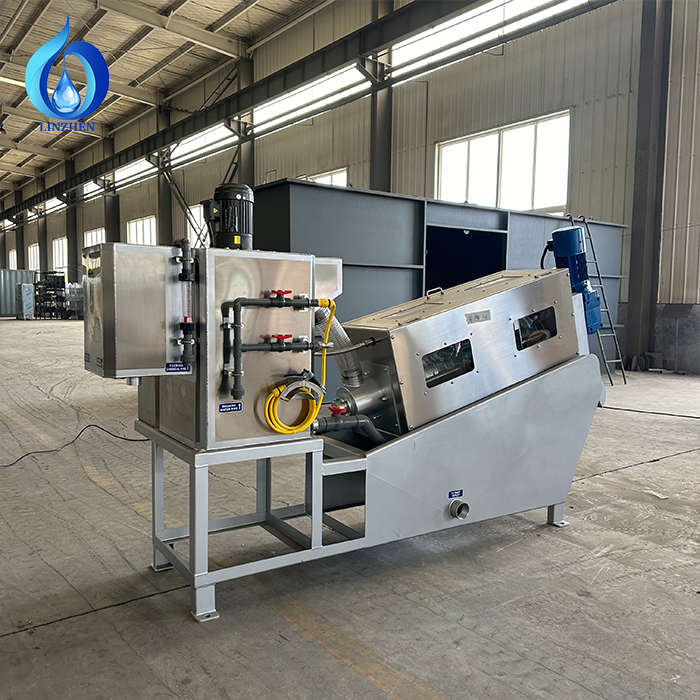
Mainstream options—such as screw press units, belt presses, and centrifuges—use different mechanical principles. Each sludge dewatering machine carries distinct power requirements and efficiency profiles. By reviewing each sludge dewatering machine type, managers can match their plant needs with the most efficient sludge dewatering machine available.
Power Consumption Metrics for Every Sludge Dewatering Machine
Measuring Energy Intensity in a Sludge Dewatering Machine
Power use in a sludge dewatering machine is measured in kilowatts (kW) normalized by dry solids processed per hour (kW/DT). This metric lets you compare any sludge dewatering machine design fairly. A sludge dewatering machine drawing 15 kW at 5 dry tons per hour yields 3.0 kW/DT. A larger sludge dewatering machine drawing 20 kW at 8 dry tons per hour achieves 2.5 kW/DT. Looking at nameplate power without dry solids rates gives a false impression of true sludge dewatering machine performance.
Sludge concentration alters sludge dewatering machine efficiency. Higher inlet solids reduce the energy needed per dry ton in any sludge dewatering machine because less water is removed mechanically. Dilute feed forces a sludge dewatering machine to work harder, increasing energy use per ton. Evaluating inlet solids helps benchmark your sludge dewatering machine against nominal vendor specs.
Nameplate Power vs Actual Sludge Dewatering Machine Operating Load
Nameplate ratings show maximum power, not average sludge dewatering machine energy draw. A sludge dewatering machine rated at 45 kW may draw only 25–35 kW during normal operation. When choosing a sludge dewatering machine, request realistic load curves rather than relying on nameplate limits. This ensures accurate electrical billing projections for your sludge dewatering machine installation.
Energy Profiles by Sludge Dewatering Machine Type
Screw Press Sludge Dewatering Machine: Low Energy Draw
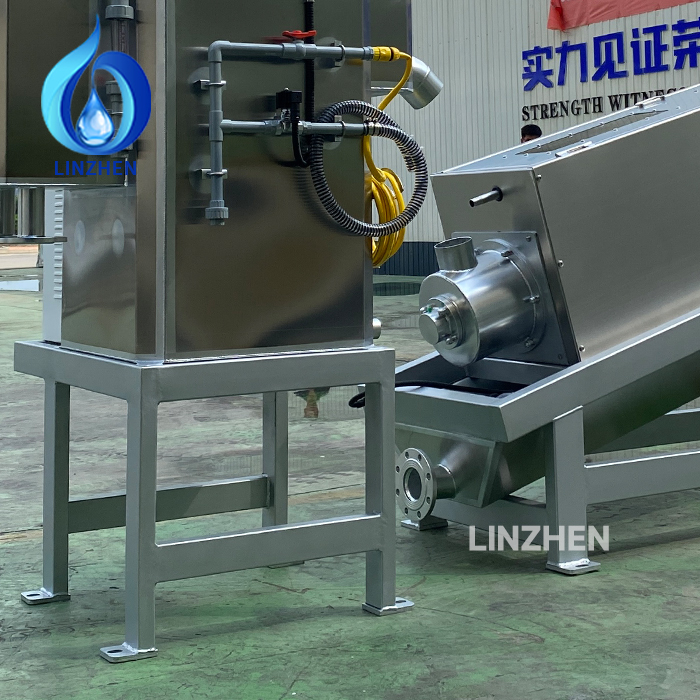
A screw press sludge dewatering machine relies on slow compression within a screen basket. Rotating at 1 to 4 RPM, this sludge dewatering machine minimizes shear forces and drastically cuts motor energy demand. A modern screw press sludge dewatering machine uses only 1.0 to 2.5 kW per dry ton, making this sludge dewatering machine style the most energy-efficient choice available.
Low rotation speeds in a screw press sludge dewatering machine protect chemical flocs, reducing polymer demands. Efficient flocculation lets the sludge dewatering machine drain water rapidly with minimal effort. Furthermore, a screw press sludge dewatering machine handles feed variations smoothly without power spikes, providing steady operation for your facility.
Belt Press Sludge Dewatering Machine: Moderate Energy Use
A belt press sludge dewatering machine passes sludge between moving filter belts over rollers. Drive motors move the belts while auxiliary pumps wash screens and power hydraulic tensioners. A standard belt press sludge dewatering machine consumes 2.0 to 3.5 kW per dry ton. While effective, overall sludge dewatering machine energy use rises when factoring in auxiliary wash water pumps.
Power use in a belt press sludge dewatering machine varies with belt speed and tension. Operators can slow belt travel during low-flow periods to lower energy draw. However, multiple motors in a belt press sludge dewatering machine increase overall electricity consumption compared to a single-drive screw press sludge dewatering machine.
Centrifuge Sludge Dewatering Machine: High Power Demand
A centrifuge sludge dewatering machine uses centrifugal force at high speeds (2,000–3,800 RPM) to separate solids from liquid. High speeds allow high throughput, but force this sludge dewatering machine to consume 3.5 to 6.0 kW per dry ton. Facilities select a centrifuge sludge dewatering machine mainly when footprint is limited or throughput is the top priority.
In addition to bowl drive power, a centrifuge sludge dewatering machine requires secondary power to drive the internal scroll conveyor. This dual-drive mechanism increases overall energy consumption. Plants seeking low energy bills usually avoid a high-speed centrifuge sludge dewatering machine in favor of slower alternatives.
Selecting an Efficient Sludge Dewatering Machine
Matching the Right Sludge Dewatering Machine to Your Site
Choosing an energy-efficient sludge dewatering machine requires evaluating feed solids, space, and labor limits. A screw press sludge dewatering machine delivers peak efficiency at feed solids above 2.0% TSS. Dilute feeds may require pre-thickening to keep your sludge dewatering machine in its optimal range. Pre-thickening sludge allows a screw press sludge dewatering machine to yield massive long-term power savings.
The investment in an efficient sludge dewatering machine pays off quickly through reduced electricity bills. A low-power sludge dewatering machine saves money continuously over thousands of operating hours. Equipping a sludge dewatering machine with variable frequency drives lets operators match motor speeds to feed conditions, further boosting sludge dewatering machine performance.
Operational Factors to Reduce Sludge Dewatering Machine Power Use
Proper operating practices lower energy consumption for any sludge dewatering machine model. Correct polymer dosing forms strong flocs, letting water drain easily so the sludge dewatering machine requires less mechanical work. Under-dosing or over-dosing polymer forces the sludge dewatering machine to work harder, pushing up power draw.
Routine maintenance keeps your sludge dewatering machine running efficiently. Lubricating bearings, inspecting drive belts, and clearing screens reduces mechanical drag in your sludge dewatering machine. Maintaining your sludge dewatering machine ensures it operates within original design specifications throughout its working life.
FAQ
Which sludge dewatering machine consumes the least power per dry ton?
A screw press sludge dewatering machine delivers the lowest power use, consuming 1.0 to 2.5 kW per dry ton. This sludge dewatering machine operates at low speeds (1–4 RPM) using slow compression, avoiding the high motor power required by a centrifuge sludge dewatering machine or belt press unit.
Does feed concentration impact sludge dewatering machine energy efficiency?
Yes, feed solids concentration directly impacts sludge dewatering machine energy performance. Higher feed solids lower energy intensity because less water is removed mechanically per ton by the sludge dewatering machine. Dilute feed forces a sludge dewatering machine to process higher fluid volumes, increasing power use per dry ton.
How can operators reduce sludge dewatering machine power consumption?
Optimizing polymer conditioning, maintaining stable feed rates, and executing routine maintenance reduce sludge dewatering machine power draw. Proper polymer dosing helps the sludge dewatering machine separate solids quickly. Regular maintenance prevents friction in your sludge dewatering machine and keeps energy consumption minimal.
 EN
EN