The choice between a belt press and a screw-type sludge dewatering machine represents one of the most critical decisions in wastewater treatment facility design and operations. Both technologies address the fundamental challenge of solid liquid separation, yet they employ fundamentally different mechanical principles that directly influence cake dryness optimization, operational costs, and long-term system performance. Understanding these distinctions enables facility managers to select the dewatering approach that best aligns with their processing volumes, sludge characteristics, and sustainability goals.
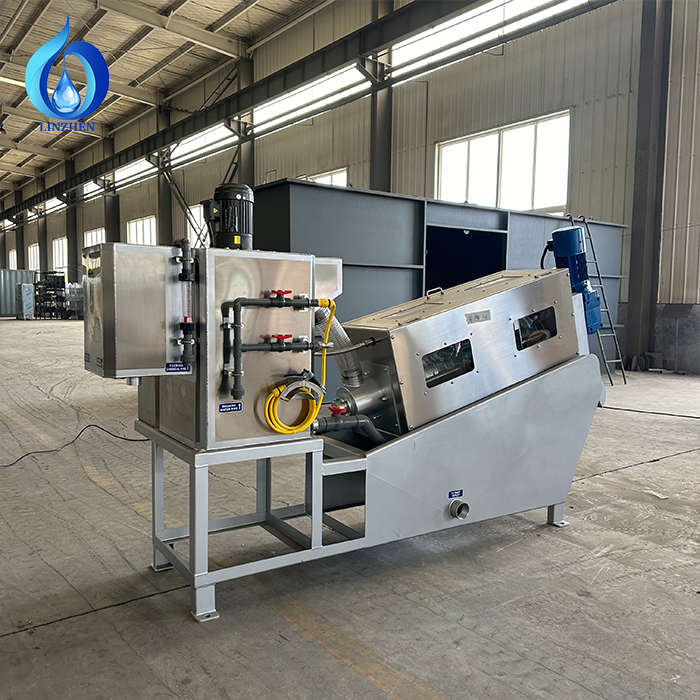
While both technologies fall under the broad category of mechanical dewatering equipment, their operational architectures diverge significantly. A belt press relies on continuous conveyor belts that compress and drain sludge through gravity and pressure applied sequentially across multiple zones. In contrast, a screw-type sludge dewatering machine uses an Archimedean screw mechanism that progressively compresses sludge within a fixed housing, forcing liquid through perforated walls while moving solids toward a discharge port. These design differences produce measurable variations in cake dryness optimization, throughput consistency, energy demand, and maintenance requirements.
Mechanical Design and Separation Principles
Belt Press Architecture and Fluid Recovery
Belt presses employ a layered approach to solid liquid separation. Conditioned sludge enters the top of the device between two permeable belts that begin moving downward. The gravity drainage zone allows initial free water separation without applied pressure, while subsequent pressure zones introduce progressively higher compression forces. The belts themselves remain flexible, allowing sludge cake to deform and release trapped water throughout the compression sequence. This gradual, multi-stage approach tends to generate cake dryness levels between 18% and 25% solids content, depending on sludge quality and conditioning chemistry.
Screw Press Mechanism and Cake Consolidation
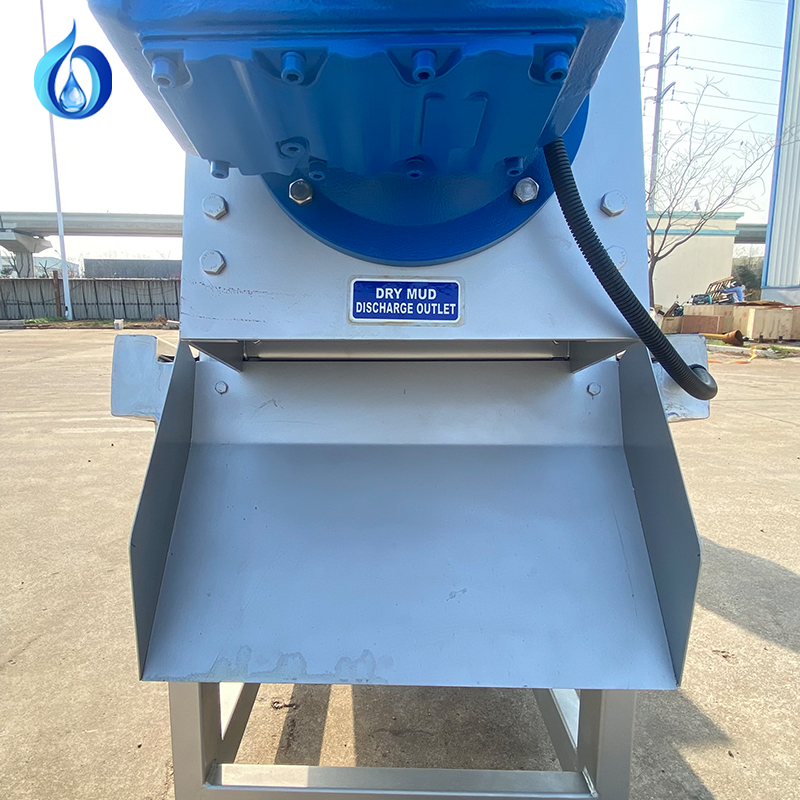
Screw-type equipment operates on continuous displacement principles. Raw or conditioned sludge enters a fixed conical chamber where an internal screw rotates at controlled speeds, typically 10 to 25 revolutions per minute. As the screw advances sludge toward the discharge, the chamber diameter decreases, creating volumetric compression and forcing liquid through strategically positioned perforated sections. The rigid screw and housing configuration enables more forceful compression compared to flexible belts, often achieving cake dryness optimization in the 22% to 30% solids range for standard municipal sludge. The continuous displacement mechanism provides excellent solid liquid separation for thicker, more viscous feedstocks.
Operational Performance and Cake Dryness Optimization
Throughput Consistency and Pressure Control
Belt press performance depends heavily on maintaining consistent belt speed, pressure sequencing, and polymer dosing. These machines excel at handling variable sludge compositions because operators can adjust pressure zones independently and reduce belt speed when feed conditions change. Screw presses offer different operational flexibility; they maintain constant rotational speed, but discharge pressure automatically increases when sludge volume or concentration rises. This self-regulating behavior provides excellent consistency for facilities with relatively stable feedstock, but may require downstream torque control systems to prevent overload during upsets. Cake dryness optimization on screw units typically reflects more predictable performance bands because mechanical compression remains proportional to screw rotation speed and input sludge mass.
Polymer Conditioning Requirements and Chemical Usage
Both technologies require chemical conditioning, but their polymer demands differ substantially. Belt presses typically consume 10 to 20 kilograms of polymer per ton of dry solids processed, while screw-type sludge dewatering machines often operate effectively at 6 to 15 kilograms per ton, particularly when handling higher-solids feedstocks. The screw mechanism's greater mechanical compression reduces reliance on polymer chemistry to achieve solid liquid separation. However, the specific polymer type matters significantly for each technology; belt presses often favor high-molecular-weight cationic polymers that function well under moderate pressure, while screws sometimes perform better with polyelectrolyte solutions optimized for thicker cake formation. Facility managers evaluating cake dryness optimization must factor these conditioning costs into lifecycle budget calculations.
Installation, Maintenance, and Operational Scalability
Footprint, Capital Investment, and Installation Complexity
Belt presses typically require larger floor space because the material must travel the full length of multiple pressure zones to achieve adequate dewatering. A standard belt press processing 50 cubic meters per hour occupies roughly 8 to 12 meters of floor length. Screw-type equipment concentrates the entire sludge dewatering machine operation within a compact vertical or horizontal vessel, often reducing footprint by 40% to 60% compared to equivalent-capacity belt systems. Capital costs reflect this difference; belt presses generally range from 250,000 to 500,000 USD for mid-sized facilities, while screw presses cover a similar range but often provide greater throughput per unit of footprint. Installation complexity favors screw technology because the equipment requires simpler foundation work, fewer operational adjustments during commissioning, and less complex polymer injection point alignment.
Maintenance Accessibility and Component Durability
Belt presses require regular belt tensioning, roller maintenance, and frequent blade replacements due to wear from continuous abrasion against sludge and conditioning chemicals. The gravity drainage zone and pressure zones each contain wear surfaces that demand periodic inspection and adjustment. Screw-type sludge dewatering machines concentrate mechanical stress on the screw flights, bearings, and perforated screen sections, but these components typically achieve longer intervals between replacement because they operate within a sealed housing that reduces exposure to environmental contamination. Facility operators often find that screw presses require less frequent intervention for routine adjustments, although bearing maintenance and screw flight wear monitoring remain essential for sustained cake dryness optimization. Belt press technology demands more active operational oversight to maintain consistent performance bands.
Application Suitability and Decision Criteria
Sludge Characteristics and Feed Quality Variability
The choice between these technologies depends significantly on feed sludge characteristics. Belt presses handle variable sludge compositions well because multiple pressure zones allow operators to modulate compression independently, and the equipment tolerates fluctuations in dry solids content without mechanical damage. Screw-type equipment performs optimally when sludge composition remains relatively consistent because the fixed chamber geometry creates predictable displacement and pressure profiles. For facilities processing primary sludge mixed with secondary biosolids, belt presses offer greater operational flexibility. For installations treating primarily secondary sludge or handling anaerobically digested material with stable characteristics, screw presses deliver excellent solid liquid separation and cake dryness optimization with fewer operational adjustments.
Facility Scale and Long-Term Capacity Planning
Small to mid-sized facilities often favor belt press technology because individual units scale relatively linearly; adding a second belt press simply doubles capacity. Screw-type sludge dewatering machines achieve higher specific throughput per unit volume, making them more attractive for larger facilities or locations with severe space constraints. A single large-capacity screw press can often replace multiple smaller units while occupying significantly less floor area. For wastewater treatment plants planning future expansion, screw technology provides superior modularity because subsequent capacity increases can occur vertically without expanding the facility footprint. Cake dryness optimization capabilities improve on both platforms with larger-capacity equipment, so selection should reflect not only current processing volumes but anticipated growth trajectories and site development limitations.
FAQ
What specific advantages does a screw-type sludge dewatering machine provide compared to belt press design?
Screw-type equipment typically achieves higher cake dryness levels, requires less floor space, and demands reduced polymer dosing for solid liquid separation. The continuous displacement mechanism creates consistent self-regulating pressure, minimizing operator adjustment frequency. Belt presses offer superior flexibility for variable feedstocks and multiple independent pressure zone control, making them preferable when sludge composition fluctuates significantly.
How do cake dryness optimization targets differ between belt and screw press technologies?
Belt presses typically achieve 18% to 25% solids content in the dewatered cake, while screw-type equipment often produces 22% to 30% solids depending on sludge characteristics and polymer conditioning. Screw presses excel at solid liquid separation for thicker, more stable feedstocks, while belt systems provide more modular pressure control for facilities with variable sludge qualities. Actual cake dryness achievable by either technology depends on feed conditioning, dry solids concentration, and equipment-specific design parameters.
Which technology requires lower maintenance and operational oversight?
Screw-type sludge dewatering machines generally require less frequent routine adjustment because the sealed housing protects internal components and the mechanism operates at constant rotational speed. Belt presses demand more active monitoring for pressure zone calibration, belt tension adjustment, and blade wear management. However, both technologies require regular inspection schedules and component replacement programs to maintain consistent cake dryness optimization and prevent operational failures.
 EN
EN