Small-town municipalities face mounting pressure to upgrade aging infrastructure while managing tight budgets. Choosing the right technology for sewage treatment involves weighing performance, operational complexity, and long-term sustainability. Sequencing Batch Reactor (SBR) systems have emerged as a viable option for communities seeking advanced sewage treatment capabilities without the footprint or cost of conventional activated sludge plants. Understanding whether SBR technology aligns with your municipality's specific needs requires examining technical performance, operational demands, and financial feasibility in the context of small-town infrastructure constraints.
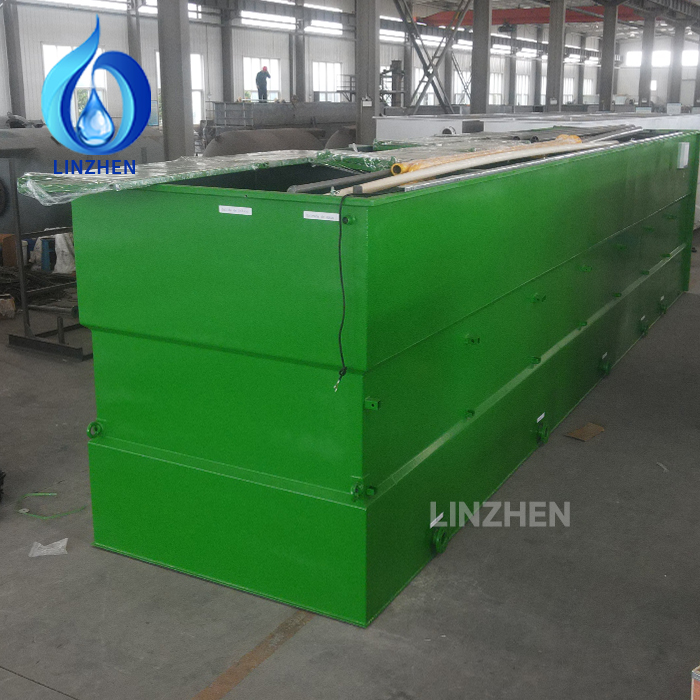
For small towns evaluating their sewage treatment infrastructure, SBR technology offers distinct operational and spatial advantages compared to conventional approaches. The compact design of SBR sewage treatment systems makes them particularly attractive for municipalities with limited land availability. Before committing to this technology, decision-makers must assess whether the technical capabilities, staffing requirements, and maintenance protocols align with their operational capacity and financial resources.
Understanding SBR Sewage Treatment Systems
Core Technology and Operating Principles
SBR sewage treatment operates through a fill-and-draw cycle rather than continuous flow like traditional activated sludge plants. The reactor vessel receives incoming wastewater, undergoes aeration and biological treatment in a single tank, then settles and decants treated effluent. This sequential batch sewage treatment approach achieves biological nitrogen and phosphorus removal within one vessel, eliminating the need for separate clarifiers and return sludge systems. Small-town sewage treatment facilities benefit from this simplified layout, which reduces the overall footprint and associated piping complexity.
The flexibility of SBR sewage treatment cycles allows operators to adjust treatment duration based on incoming wastewater strength and volume. During the aeration phase, microorganisms consume organic matter while nitrification occurs. The anoxic phase promotes denitrification, removing nitrogen compounds. After settling, the clarified effluent is discharged, leaving settled sludge behind.
Performance Metrics and Effluent Quality
Modern SBR sewage treatment plants consistently achieve effluent quality meeting or exceeding regulatory standards for biochemical oxygen demand (BOD), suspended solids, and nutrient levels. Small municipalities implementing sewage treatment upgrades with SBR technology typically see removal efficiencies exceeding ninety percent for BOD and suspended solids. The dedicated anoxic phases in SBR sewage treatment enable nitrogen removal rates above eighty percent, critical for discharge into sensitive waters where nutrient pollution poses ecological risks.
Real-world performance data from small-town sewage treatment installations demonstrates that SBR systems reliably produce effluent with total nitrogen levels below five milligrams per liter and phosphorus below one milligram per liter. This consistent performance makes SBR sewage treatment particularly valuable for municipalities facing stricter environmental regulations. Communities upgrading their sewage treatment infrastructure find that SBR technology provides the robust treatment quality necessary to meet current and anticipated future discharge permits without frequent operational adjustments.
Operational Complexity and Staffing Requirements
Control Systems and Automation Needs
SBR sewage treatment facilities require programmable logic controllers (PLCs) and automated process controls to manage fill, aeration, anoxic, settling, and decant phases. Small-town sewage treatment operators must become proficient with these control systems, though modern interfaces are increasingly user-friendly. The automation requirements for SBR sewage treatment exceed those of conventional treatment, but proportionally automated operation reduces manual intervention compared to older technology.
Municipalities considering SBR sewage treatment upgrades should evaluate their current operator skill levels and training capacity. The transition from conventional to SBR sewage treatment technology requires investment in staff education and potentially hiring personnel with automation experience. However, automated SBR sewage treatment operation reduces daily operational decisions, as the system cycles through predetermined phases. Small towns with limited operator availability sometimes find that SBR sewage treatment automation actually improves reliability by reducing human error and maintaining consistent cycle timing.
Maintenance and Troubleshooting
SBR sewage treatment systems feature fewer moving parts than conventional plants, particularly because external clarifiers and return sludge pumps are eliminated. Small-town sewage treatment staff managing SBR facilities primarily focus on aeration equipment maintenance, dissolved oxygen probe calibration, and decanter mechanism service. The single-tank approach to SBR sewage treatment simplifies troubleshooting because operators observe all treatment phases in one vessel, making process problems more immediately apparent.
Common maintenance tasks for SBR sewage treatment include membrane replacement in membrane aeration diffusers, brush or rake clarifier servicing, and decanter valve inspection. Smaller equipment inventory means less spare parts inventory and reduced stock capital requirements for small-town sewage treatment operations. However, when aeration equipment fails, SBR sewage treatment cannot function, so equipment redundancy and emergency service contracts become critical for municipalities relying on SBR sewage treatment technology.
Economic and Financial Considerations
Capital Costs and Construction Economics
Capital costs for SBR sewage treatment installations typically range from lower to mid-tier depending on treatment capacity and site-specific conditions. Small-town sewage treatment upgrades benefit from reduced land requirements, which often represents significant savings compared to conventional plant expansion. SBR sewage treatment projects typically require less site preparation and shorter construction timelines than conventional activated sludge plants, translating to reduced contractor overhead and municipal project management costs.
When evaluating SBR sewage treatment financing, municipalities should factor in equipment-intensive costs for aeration systems, decanter mechanisms, and control instrumentation. The concentrated equipment needs of SBR sewage treatment contrast with conventional plants, which distribute costs across multiple structures. Small-town sewage treatment decision-makers often find that SBR systems offer competitive capital costs when land constraints would otherwise require expensive site acquisition or off-site treatment arrangements.
Operating and Lifecycle Costs
Annual operating costs for SBR sewage treatment reflect power consumption for aeration equipment and operator labor. Small-town sewage treatment facilities typically experience higher energy costs with SBR systems compared to conventional plants due to continuous aeration during treatment cycles. However, the simplified equipment base and fewer infrastructure components reduce preventive maintenance costs relative to conventional treatment plants of equivalent capacity.
Lifecycle cost analysis for SBR sewage treatment should incorporate equipment replacement intervals and long-term solids handling expenses. Small municipalities implementing sewage treatment upgrades find that SBR lifecycle costs remain competitive when total capital and operational expenses are normalized over twenty to thirty-year planning horizons. The key variables affecting SBR sewage treatment economics include local energy rates, operator wage levels, and regional equipment availability for spare parts and service support.
Suitability Assessment for Small-Town Implementation
Matching System Capacity to Municipal Needs
SBR sewage treatment sizing flexibility makes these systems suitable for small municipalities experiencing population fluctuations or gradual growth. Unlike conventional plants designed for fixed flow rates, SBR sewage treatment can handle varying daily flows through cycle time adjustments. Small-town sewage treatment planners appreciate this flexibility because it reduces the risk of oversizing treatment capacity.
Municipalities evaluating SBR sewage treatment should establish realistic population projections and wastewater generation forecasts for twenty to thirty years into the future. SBR sewage treatment systems can typically be expanded by adding reactor vessels without replacing existing units, supporting incremental growth in small towns. This modular approach to SBR sewage treatment appeals to communities seeking infrastructure that grows with their needs rather than requiring massive upfront investment for excess capacity.
Environmental and Regulatory Context
Small-town sewage treatment facilities face increasingly stringent nutrient discharge standards, particularly in areas with nearby surface waters or groundwater concerns. SBR sewage treatment technology's integrated nitrogen and phosphorus removal capabilities make it well-suited for regulatory environments where nutrient limits are tightening. Municipalities considering sewage treatment upgrades should research current and anticipated discharge permits, as stricter standards often favor advanced treatment technologies like SBR systems.
Environmental compliance costs and regulatory penalties sometimes exceed the price differential between SBR sewage treatment and conventional technology. Small towns investigating sewage treatment solutions should engage regulatory agencies early to understand which technologies satisfy current and foreseeable permit requirements. SBR sewage treatment's robust nutrient removal often positions municipalities for long-term regulatory compliance without expensive retrofits later.
FAQ
What size population can SBR sewage treatment handle effectively?
SBR sewage treatment systems function across a wide capacity range, from small communities of a few thousand people to larger towns exceeding fifty thousand residents. The sizing depends on reactor volume, cycle time, and aeration capacity rather than land availability alone. Small-town sewage treatment facilities using SBR technology can serve populations from two thousand to one hundred thousand depending on design parameters and wastewater characteristics.
How does SBR sewage treatment compare to lagoon systems for small towns?
SBR sewage treatment requires less land than traditional lagoon systems and provides superior treatment reliability in variable climate conditions. Lagoons excel in communities with abundant land and warm climates, while SBR sewage treatment outperforms lagoons in space-limited or cold-weather regions. Small-town sewage treatment choices between lagoons and SBR systems depend on land costs, climate patterns, and regulatory discharge standards rather than treatment capability alone.
Can existing small-town sewage treatment plants be retrofitted with SBR technology?
Retrofitting conventional sewage treatment plants with SBR technology is technically feasible but often requires substantial civil work and equipment replacement. Small municipalities exploring retrofits of existing sewage treatment facilities should conduct detailed site assessments to evaluate whether existing structures can accommodate SBR reactor construction.
 EN
EN