Wastewater treatment facilities face a critical operational challenge: maintaining process stability when toxic substances suddenly enter the influent stream. Industrial discharge spikes, chemical spills, and seasonal contamination events can overwhelm conventional treatment operations, causing process failure and costly regulatory violations. A major question facing environmental engineers is whether an advanced mbbr system delivers superior resilience against toxic shock compared to standard activated sludge plants. Evaluating the core mechanics of an mbbr system demonstrates why this technology outperforms traditional suspended-growth methods under severe operating stress.
The answer is yes, and the operational advantages of an mbbr system stem from fundamental differences in biological architecture. A moving bed biofilm reactor within an mbbr system harnesses the power of high-density biofilm carrier media—specifically engineered plastic biofilm carriers—that provide biological redundancy and structural protection unavailable in conventional suspended systems. Understanding how an mbbr system functions helps facility managers select an mbbr system to safeguard their capital investment, protect downstream water quality, and guarantee uninterrupted regulatory compliance.
How MBBR System Architecture Protects Against Toxic Shock
Biofilm Carrier Media as a Biological Buffer in an MBBR System
In a standard activated sludge plant, the entire microbial population exists in a suspended, free-floating state throughout the aeration basin. When toxic chemicals enter suddenly, these exposed microorganisms suffer immediate direct contact with harmful compounds. This severe shock can kill off huge portions of active biomass, causing treatment efficiency to collapse within hours. Conversely, an mbbr system utilizes attached-growth biology that absorbs hydraulic and toxic surges without losing core treatment capacity.
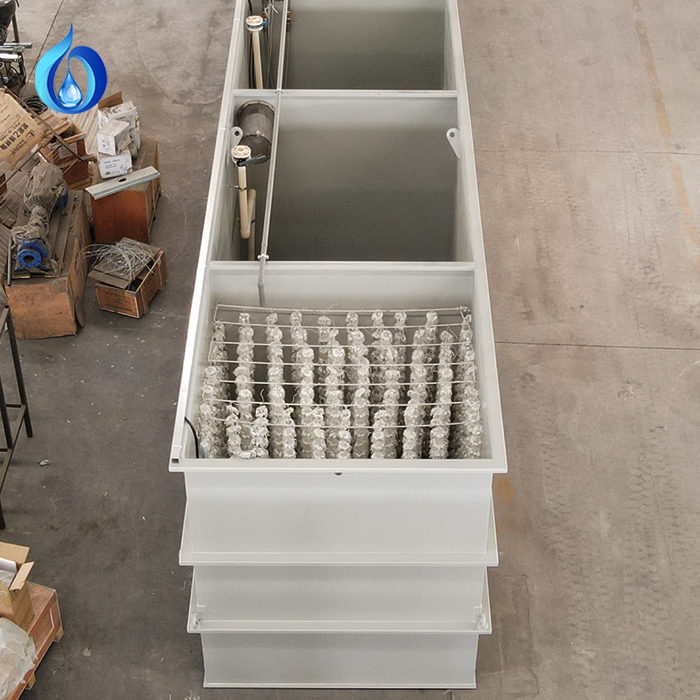
The mbbr system operates under a completely different hydraulic and biological principle. Within an active mbbr system, specialized plastic biofilm carriers—typically structured plastic elements like rings, cubes, or high-surface-area geometries—float freely inside the reactor volume. Active biomass grows densely on these carriers, forming a robust protective matrix. When toxins enter an mbbr system, the outer biological layers act as a physical and biochemical barrier. The outer biofilm in the mbbr system absorbs and degrades toxic compounds before they penetrate deeper, preserving the active core of the mbbr system.
This multi-layered defense mechanism allows an mbbr system to tolerate short-term toxic shock events that would destroy a conventional activated sludge basin. Because plastic biofilm carriers inside an mbbr system preserve a viable microbial reserve, the entire mbbr system achieves rapid biological recovery following contamination spikes.
Redundancy in Microbial Community Structure Within an MBBR System
The biofilm carrier media deployed inside an mbbr system supports a highly diverse, stratified microbial ecosystem. Different bacterial species inhabit distinct zones across the biofilm layer—ranging from aerobic organisms on the outer surface to facultative and anaerobic species deeper inside. This structural redundancy means that if a toxic event damages outer microbes in the mbbr system, deeper bacterial layers inside the mbbr system remain intact to maintain basic metabolic activity.
In contrast, activated sludge plants maintain unattached mixed liquor flocs with minimal structural depth. Microorganisms in activated sludge are completely exposed to bulk liquid toxicity. A sudden chemical pulse can wipe out entire microbial populations simultaneously, whereas an mbbr system protects deep biomass layers and speeds up system re-colonization.
Biofilm Carrier Technology: Resilience Through Design
How Plastic Biofilm Carriers Support MBBR System Stability
Engineered plastic biofilm carriers in an mbbr system maximize effective surface area while maintaining fluid movement in the aeration zone. High surface area enables massive biological accumulation within a compact mbbr system footprint. Compared to activated sludge, an mbbr system harbors significantly higher total biomass concentrations, allowing the mbbr system to dilute and neutralize toxic loads far more effectively.
High microbial density in an mbbr system absorbs toxic shocks through enhanced biodegradation kinetics. Some plastic biofilm carriers feature protected internal cavities, further shielding the mbbr system biomass. When toxic compounds enter the mbbr system, concentrated carrier biomass metabolizes pollutants before effluent quality deteriorates.
Biofilm Thickness and Self-Protection Mechanism in an MBBR System
Biofilm attached to plastic biofilm carriers within an mbbr system grows 200 to 500 micrometers thick, producing an extracellular polymeric substance matrix. This sticky matrix traps heavy metals and organic inhibitors, slowing contaminant penetration into the core of the mbbr system. Activated sludge lacks this dense protective matrix, making an mbbr system inherently more resistant to severe chemical shock.
Operational Recovery and System Stability Following Toxic Events
Faster Biomass Regeneration in an MBBR System
Following a toxic shock event, an mbbr system recovers full treatment efficiency vastly faster than a suspended activated sludge plant. Because surviving biomass remains attached to plastic biofilm carriers within the mbbr system, microbial regeneration begins immediately from protected inner layers. An mbbr system typically restores biological performance within 24 to 72 hours.
Conversely, conventional activated sludge plants experiencing toxic shock often require 5 to 14 days to rebuild suspended biomass, often needing complete re-seeding. An mbbr system completely eliminates the operational risk of sludge bulking, biomass washout, and prolonged downtime during toxic recovery phases.
Maintaining Effluent Quality During Recovery in an MBBR System
An mbbr system maintains baseline pollutant removal even immediately following severe chemical stress. Protected biological layers in the mbbr system continue converting organic loads, preventing severe effluent degradation. While an activated sludge facility risks total effluent collapse during a shock event, an mbbr system buffers performance drops to protect facility discharge permits.
FAQ
What specific toxins does an mbbr system handle better than activated sludge?
An mbbr system shows superior resilience against heavy metal salts, solvents, phenolic compounds, and high-strength organic spikes. The biofilm carrier media in an mbbr system buffers toxic concentrations, giving microorganisms sufficient time to acclimate and degrade complex pollutants.
Can plastic biofilm carriers in an mbbr system be damaged by toxic shock?
No, plastic biofilm carriers in an mbbr system are durable polymer structures unaffected by chemical shocks. If outer biological layers are damaged, the mbbr system rapidly regenerates fresh biofilm on the existing plastic biofilm carriers without requiring media replacement.
Why is an mbbr system a smart investment for industrial wastewater treatment?
Investing in an mbbr system protects treatment facilities against expensive plant shutdowns, severe regulatory fines, and costly re-seeding procedures, making the mbbr system a highly dependable long-term biological solution.
 EN
EN