Treating complex industrial effluent requires evaluating proven technologies, and deciding between dissolved air flotation and traditional settling pond infrastructure significantly impacts operational efficiency, facility spatial requirements, and long-term regulatory compliance. Utilizing modern dissolved air flotation equipment has become the preferred industry benchmark for oily wastewater treatment across refineries, manufacturing plants, and food processing sites. Understanding why this technological transition is accelerating requires analyzing key performance metrics, capital cost structures, and real-world processing limits. Evaluating DAF vs settling systems demonstrates clear technical and financial reasons why automated flotation outperforms traditional gravity separation for managing heavy industrial wastewater streams.
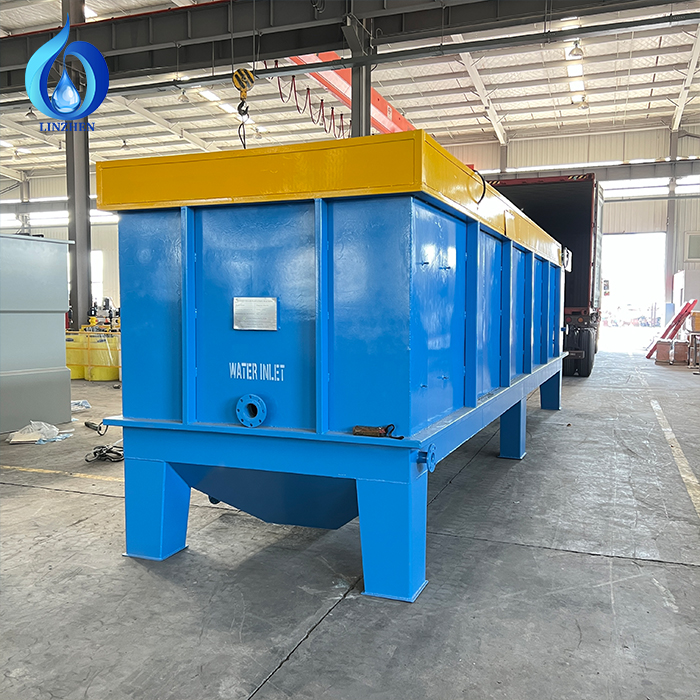
Historically, an unlined or lined settling pond was deployed to separate free oil through basic gravity, relying on density differentials to let light oil droplets float upward while heavy solids sank. However, a conventional settling pond demands vast land acreage, operates very slowly, and struggles to satisfy modern environmental discharge permits. A specialized dissolved air flotation system, by contrast, actively introduces pressurized micro-bubbles into the liquid phase. This advanced mechanism drastically accelerates oily wastewater treatment, achieving superior effluent clarity within a small mechanical footprint compared to any passive settling pond design.
Separation Speed and Emulsion Treatment Performance
Accelerating Oil Water Separation in Industrial Wastewater
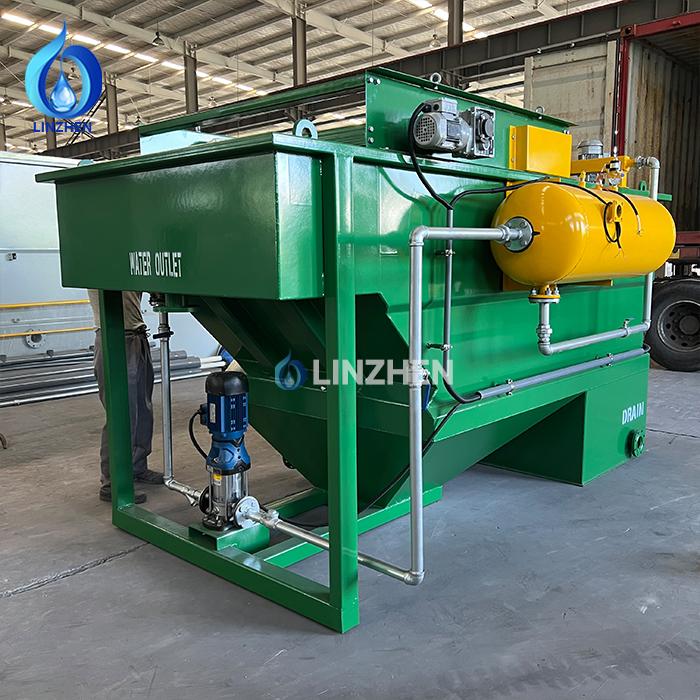
Advanced dissolved air flotation operates by supersaturating a recycle stream with compressed air, then releasing microscopic bubbles into the main flotation tank. These micro-bubbles attach directly to suspended hydrocarbons and particulates, driving them rapidly to the surface to form a concentrated scum layer. When analyzing DAF vs settling performance, this bubble-attachment process yields separation speeds 5 to 10 times faster than natural gravity separation. Consequently, continuous dissolved air flotation processes equivalent volumes of industrial wastewater using tank dimensions one-tenth the size of a standard settling pond.
A traditional settling pond depends entirely on quiescent hydraulic detention, taking anywhere from 6 to 24 hours to separate free oils depending on fluid temperature and droplet sizes. In contrast, dissolved air flotation completes comprehensive oily wastewater treatment in just 20 to 40 minutes. For manufacturing plants generating high daily flows of industrial wastewater, this speed differential translates into minimal retention times, reduced civil infrastructure costs, and faster water recycling cycles compared to relying on an open settling pond.
Overcoming Complex Emulsified Oil Limitations
Many contaminated discharge streams contain stabilized chemical or mechanical emulsions that resist natural gravity separation. A standard settling pond cannot treat emulsified oils effectively because gravitational buoyancy alone cannot break droplet surface tension. Deploying dissolved air flotation solves emulsion challenges by combining chemical conditioning with micro-bubble flotation. Adding coagulants and polymers upstream destabilizes suspended oil droplets, allowing the dissolved air flotation unit to capture fine particles efficiently. This capability makes flotation the ideal technology for handling challenging industrial wastewater containing cutting fluids, lubricants, and surfactants.
Footprint Efficiency and Total Cost of Ownership
Facility Space Requirements and Installation Footprints
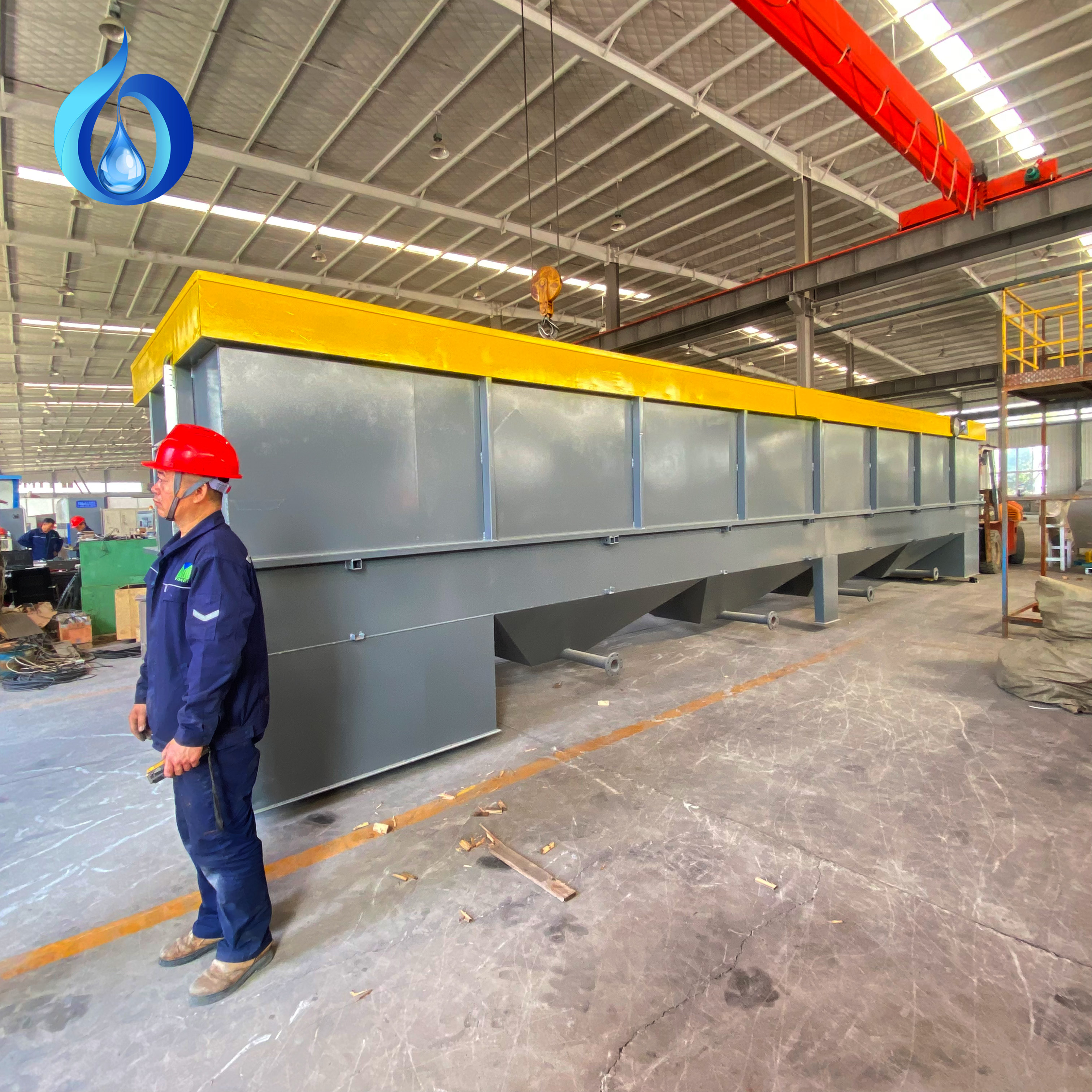
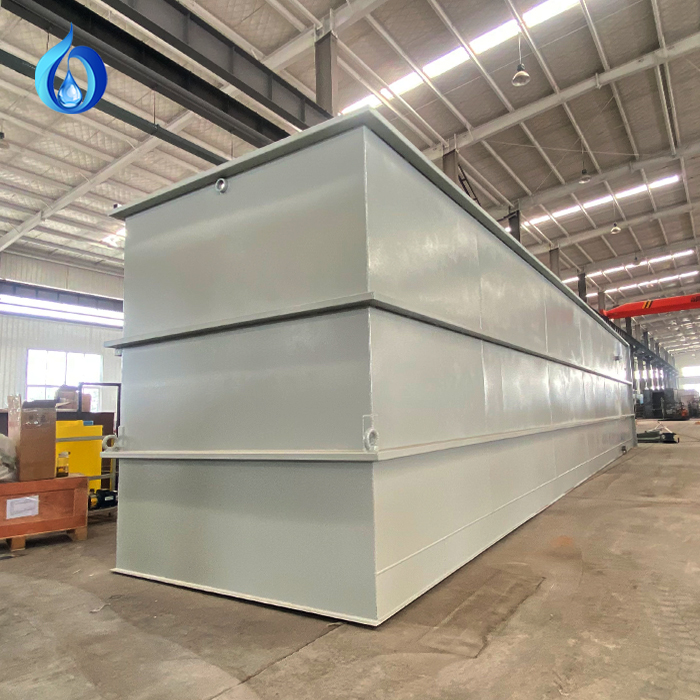
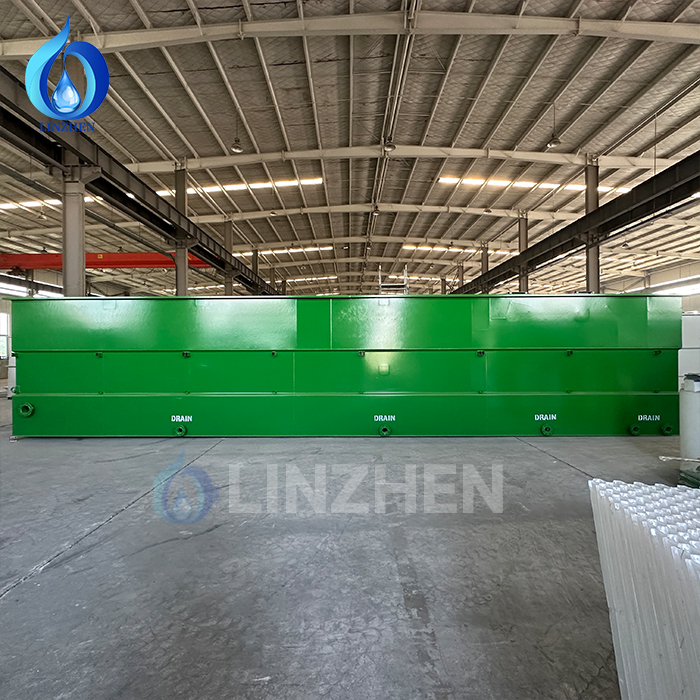
A massive settling pond engineered to process 500 cubic meters per hour of oily influent typically requires 2,000 to 3,000 square meters of prime real estate. An equivalent dissolved air flotation unit occupies only 150 to 300 square meters, delivering a 90 percent reduction in physical footprint. For urban factories, offshore platforms, or space-constrained industrial zones, this spatial advantage makes dissolved air flotation far more practical than expanding an earthen settling pond.
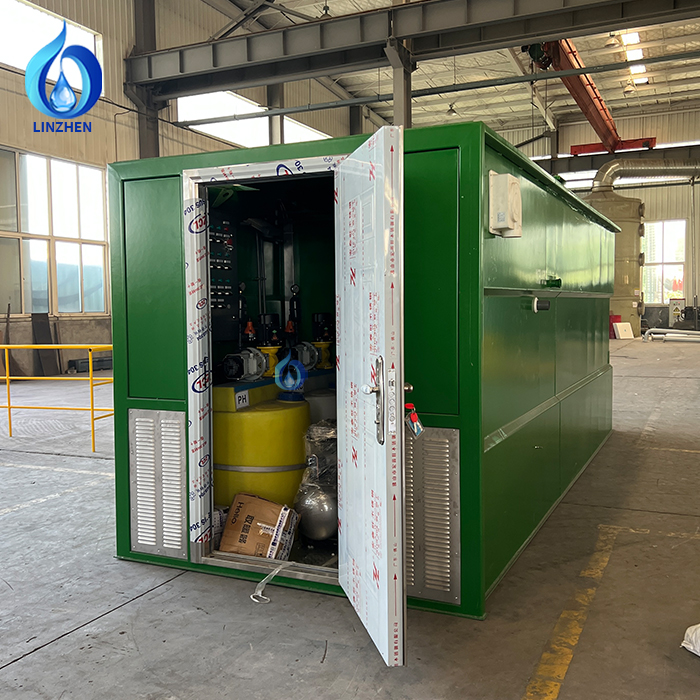
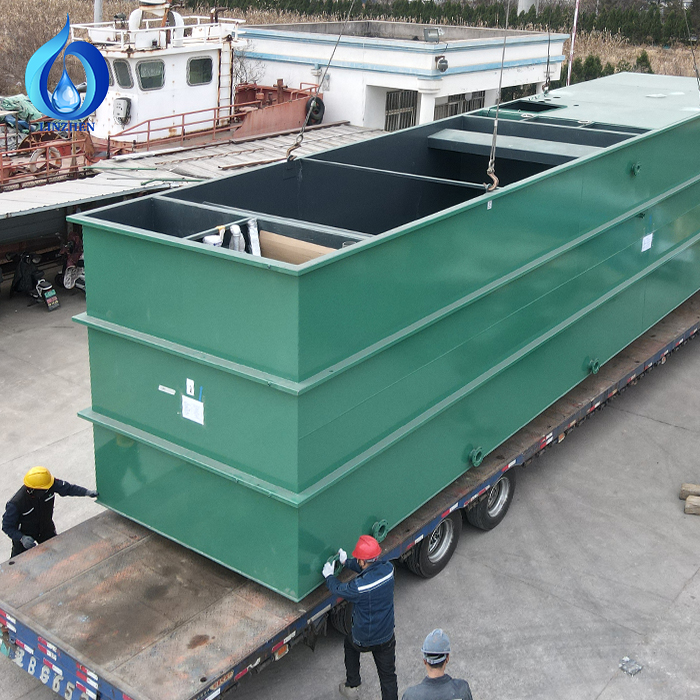
Installation complexity also strongly favors modern mechanical equipment over civil excavation. Constructing an earthen settling pond requires extensive earthmoving, synthetic lining, and groundwater protection monitoring. Conversely, modular dissolved air flotation skid packages arrive fully assembled with integrated pumps, blowers, and controls. When comparing upfront installation capital in DAF vs settling evaluations, skid-mounted flotation units significantly reduce civil work costs while offering simple scalability for expanding industrial wastewater capacity.
Operating Costs and Sludge Management Economics
While a passive settling pond uses little electrical power, modern dissolved air flotation systems require modest power for recycle pumps and air compressors. However, comparing total lifecycle expenses in DAF vs settling studies confirms that flotation delivers lower total cost of ownership. Over time, an open settling pond accumulates toxic sludge that requires periodic dredging, heavy machinery transport, and expensive hazardous waste disposal every few years. A automated dissolved air flotation unit continuously produces dense, dewatered sludge, lowering total waste disposal volumes during routine oily wastewater treatment.
Power consumption for modern dissolved air flotation averages only 0.8 to 1.2 kilowatt-hours per cubic meter of treated water. Meanwhile, managing an open settling pond introduces severe hidden costs, including land lease expenses, groundwater contamination liabilities, and odor mitigation. Over a 15-year operational lifecycle, choosing dissolved air flotation over a passive settling pond reduces cumulative operating expenditure by 25 to 40 percent for major industrial wastewater facilities.
Environmental Compliance and Continuous Monitoring
Meeting Strict Discharge Limits with Flotation Systems
Environmental discharge permits increasingly restrict residual oil concentrations to under 10 parts per million. A conventional settling pond rarely achieves better than 30 to 50 parts per million, exposing operators to regulatory fines. Highly efficient dissolved air flotation systems routinely achieve 3 to 8 parts per million residual oil in treated effluent. Implementing flotation ensures long-term compliance for oily wastewater treatment while enabling facilities to reuse purified water within industrial boilers and cooling loops.
Modern regulatory frameworks demand transparent, verifiable operational data. An advanced dissolved air flotation skid integrates automated turbidity sensors, flow meters, and digital control panels for real-time compliance reporting. A static settling pond provides no automated monitoring capabilities, requiring manual sampling and lab testing. Upgrading to automated dissolved air flotation ensures reliable compliance, eliminates environmental liability, and establishes high-performance oily wastewater treatment across all manufacturing operations.
FAQ
Why is dissolved air flotation preferred over a settling pond for high-volume industrial wastewater?
Dissolved air flotation processes wastewater up to 10 times faster using micro-bubbles, achieving superior effluent clarity while requiring 90% less land area than a traditional settling pond for industrial wastewater treatment.
Can a settling pond effectively treat emulsified oil in industrial wastewater?
No, a passive settling pond relies solely on gravity and cannot break chemical oil emulsions. A dissolved air flotation system uses chemical conditioning combined with air micro-bubbles to achieve complete emulsion separation during oily wastewater treatment.
How do DAF vs settling systems compare regarding long-term operating costs?
While a settling pond has minimal power draw, it requires expensive, disruptive sludge dredging every few years. Dissolved air flotation continuously produces compact, dewatered sludge, lowering overall lifecycle operating costs in DAF vs settling economic evaluations.
 EN
EN