Factory outflows containing complex saline organic wastewater present a unique operational challenge for modern industrial facilities. The intrinsic complexity arises because dissolved inorganic salts and complex organic compounds behave fundamentally differently under standard treatment processes, making continuous processing of saline organic wastewater difficult without specialized engineering approaches. Selecting the correct waste water treatment path for your facility's mixed discharge stream is essential for operational efficiency, cost control, and maintaining high-performance saline organic wastewater purification.
Selecting the appropriate sewage purification method for saline organic wastewater depends on multiple technical factors including precise salt concentration, organic loading, regional discharge standards, and site-specific operational constraints. Many industrial manufacturing facilities struggle with overall effluent management because they rely on traditional single-stage solutions designed strictly for either pure saline or purely organic streams. Without specialized saline organic wastewater technology, processing complex industrial waste streams leads to compliance failure. This article examines the specialized treatment pathways available for treating saline organic wastewater to help you establish a reliable, fully compliant strategy.
Understanding Saline Organic Wastewater Composition and Treatment Challenges
Characteristics of Saline Organic Wastewater Streams
Treating saline organic wastewater containing both high total dissolved solids and elevated organic matter creates severe biological and physical obstacles. Inorganic salts in saline organic wastewater remain highly stable and inherently resistant to biological degradation, whereas organic compounds are biodegradable but high salinity severely inhibits bacterial metabolic activity in standard treatment tanks. Consequently, conventional waste water treatment approaches routinely fail when processing saline organic wastewater because elevated salinity causes osmotic shock in standard activated sludge systems, leading to severe microbial cell lysis in saline organic wastewater processing units.
Organic load in saline organic wastewater typically manifests as chemical oxygen demand (COD), while salt content is measured as total dissolved solids (TDS) or electrical conductivity. In chemical manufacturing, food processing, and textile dying facilities, saline organic wastewater parameters coexist in high concentrations. Implementing sustainable effluent management becomes significantly more challenging when COD levels in saline organic wastewater are moderate to high and salt concentrations exceed 3,000 mg/L, causing conventional biological industrial wastewater treatment units to experience acute operational failure.
Why Standard Single-Path Solutions Fail on Saline Organic Wastewater
Facilities frequently attempt to process saline organic wastewater using single-stage sewage purification systems designed for uniform waste streams. However, standard biological plants treating saline organic wastewater suffer from massive sludge bulking and rapid decline in organic removal efficiency. Conversely, physical salt removal processes applied directly to raw saline organic wastewater suffer from severe membrane fouling caused by untreated organic compounds. This structural mismatch highlights why managing saline organic wastewater demands integrated, multi-stage industrial wastewater treatment architectures specifically built for complex saline organic wastewater applications.
Treatment Pathways for Mixed Saline Organic Wastewater Discharge
Pre-treatment and Desalination Strategy for Saline Organic Wastewater
The first treatment pathway for saline organic wastewater involves isolating or pre-treating organic contaminants prior to physical salt removal. Chemical coagulation, electrocoagulation, and advanced physical separation eliminate suspended solids and complex organics from saline organic wastewater streams. By removing the organic fouling layer from saline organic wastewater first, downstream membrane processes like reverse osmosis can process the remaining saline brine effectively, ensuring stable long-term effluent management.
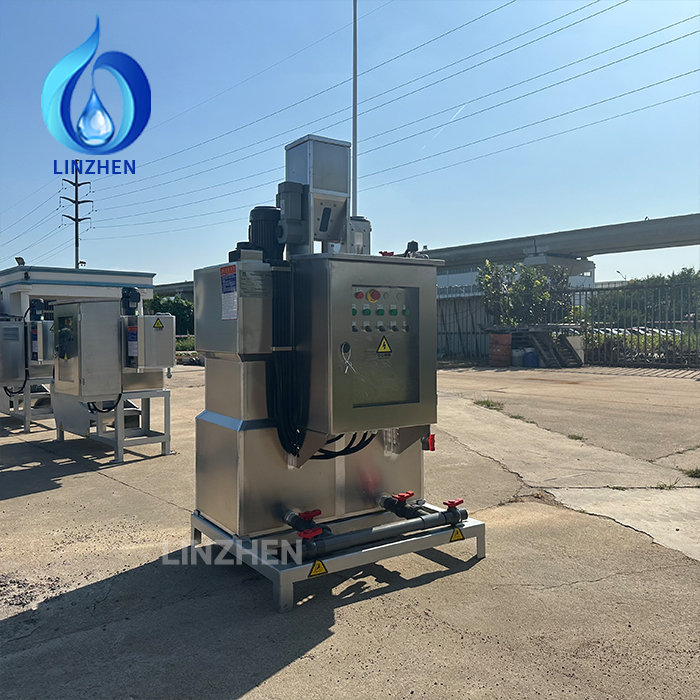
Alternatively, implementing chemical oxidation prior to membrane filtration allows operators to reduce the organic load in saline organic wastewater. Utilizing optimized waste water treatment chemical dosing systems optimizes coagulant feed rates, enabling microorganisms to process saline organic wastewater across variable salinity levels. For heavy manufacturing installations, this sequential pre-treatment method ensures predictable sewage purification results for all generated saline organic wastewater streams.
Integrated Biological and Chemical Treatment of Saline Organic Wastewater
A second pathway combines specialized halophilic biological systems with advanced chemical oxidation to process saline organic wastewater directly. Halophilic bacterial cultures thrive in high-salinity saline organic wastewater environments, effectively metabolizing organic pollutants without suffering osmotic stress. When combined with ozone or advanced chemical oxidation stages, this integrated approach degrades complex saline organic wastewater without requiring capital-intensive desalination hardware, offering an extremely efficient industrial wastewater treatment alternative for high-load saline organic wastewater streams.
Advanced oxidation processes break down refractory organic matter in saline organic wastewater into simple biodegradable intermediates. By combining chemical oxidation and salt-tolerant biological reactors, plant managers achieve comprehensive sewage purification for saline organic wastewater while maintaining a compact footprint and streamlined effluent management controls.
Membrane and Evaporation Solutions for High-Concentration Saline Organic Wastewater
For facilities generating concentrated saline organic wastewater streams, combining specialized ultrafiltration with mechanical vapor recompression (MVR) evaporators provides a comprehensive Zero Liquid Discharge (ZLD) option. High-pressure membranes concentrate the saline organic wastewater, permitting clean water recycling while sending the concentrated organic brine from saline organic wastewater to evaporators. Although capital intensive, this specialized saline organic wastewater treatment strategy eliminates liquid discharge penalties entirely.
Selecting the Right Path for Your Facility
Decision Criteria for Saline Organic Wastewater Infrastructure
Determining the ideal waste water treatment path for your facility's saline organic wastewater requires comprehensive chemical characterization. Accurate testing of TDS, COD, daily flow volume, and seasonal fluctuation patterns determines whether biological, chemical, or evaporative sewage purification is most cost-effective for your saline organic wastewater. Matching your saline organic wastewater profile against treatment design capabilities ensures full compliance while minimizing ongoing operational expenses.
Lifecycle capital and maintenance costs must guide your selection for saline organic wastewater systems. While halophilic biological treatment of saline organic wastewater offers low energy expenses, evaporative technologies deliver maximum compliance security for high-salinity saline organic wastewater streams. Engaging experienced effluent management engineers ensures your selected industrial wastewater treatment system matches actual saline organic wastewater conditions.
FAQ
What salinity level makes standard waste water treatment ineffective for saline organic wastewater?
Standard biological waste water treatment plants experience severe performance loss when treating saline organic wastewater with TDS levels exceeding 3,000 mg/L. Beyond this concentration, osmotic pressure disrupts unadapted microbial cultures, necessitating specialized saline organic wastewater treatment methodologies.
Can chemical dosing alone handle complex saline organic wastewater?
Chemical dosing alone cannot fully treat raw saline organic wastewater because chemical coagulants only remove organic matter, leaving dissolved salts in saline organic wastewater intact. Effective sewage purification requires combining chemical dosing with specialized biological stages or membrane processes to achieve complete effluent management of saline organic wastewater.
Which waste water treatment method is most economical for small factories generating saline organic wastewater?
For smaller facilities producing saline organic wastewater, combining automated chemical pre-treatment with salt-tolerant biological processes offers the optimal balance between capital expenditure, energy consumption, and overall saline organic wastewater treatment performance.
 EN
EN