Selecting an efficient pathogen reduction strategy for the final effluent stage of a small sewage treatment plant is essential for protecting public health and ensuring strict environmental compliance. Small-scale facilities face distinct operational hurdles when implementing a reliable germ-kill method that balances capital efficiency, low maintenance, and continuous regulatory adherence. Because final discharge serves as the ultimate barrier protecting natural water bodies, choosing the correct germ-kill method directly dictates environmental safety. Plant operators must carefully compare various wastewater disinfection options to identify which germ-kill method achieves superior operational reliability for their specific site constraints.
The overall efficacy of any biological control strategy depends on understanding raw microbial loads in discharge streams and local environmental mandates. Most small sewage treatment operations must achieve multi-log pathogen reduction to satisfy discharge permits, which regularly govern indicator bacteria, viruses, and parasites. The debate surrounding physical versus chemical treatment shapes long-term operational costs and compliance stability. Evaluating each mainstream germ-kill method allows facility managers to implement a tailored wastewater disinfection solution suited to their specific hydraulic and financial realities.
Physical Disinfection Mechanisms in Sewage Treatment
Ultraviolet Light Technology for Pathogen Inactivation
Ultraviolet irradiation has emerged as a premier physical germ-kill method across modern municipal water processing plants. Applying UV disinfection damages microbial genetic material, preventing cellular replication without introducing hazardous chemical residuals into receiving streams. This physical germ-kill method is ideal for a small sewage treatment facility because it eliminates chemical handling hazards and simplifies routine site operations. However, the performance of UV disinfection as a primary germ-kill method relies heavily on effluent clarity, optical transmittance, and proper lamp maintenance.
Deploying a UV disinfection process within a small sewage treatment plant requires calculating electrical demand and lamp fouling rates. Modern modular systems allow flexible expansion as plant flow increases. This physical germ-kill method yields immediate, verifiable pathogen reduction, providing operators with confidence during compliance testing. Nevertheless, unlike chemical options in the chlorination vs UV comparison, physical UV disinfection leaves no lasting residual, which may require secondary polishing depending on local permit specifications.
Membrane Barrier Filtration and Physical Retention
Membrane filtration provides a robust mechanical germ-kill method that physically sifts pathogens out of the discharge stream. Microfiltration and ultrafiltration membranes serve as a highly effective physical germ-kill method, functioning as both a clarification step and a primary barrier. These physical separation systems excel in small sewage treatment facilities facing stringent discharge parameters or discharging into sensitive aquatic environments where consistent wastewater disinfection is critical.
Managing membrane fouling and replacement cycles remains the main operational requirement for this physical germ-kill method. Facilities must establish regular chemical cleaning routines and monitor pressure differentials. While membrane systems provide a reliable germ-kill method without chemical byproducts, pairing membrane filtration with secondary UV disinfection creates a multi-barrier defense that maximizes environmental safety for any small sewage treatment site.
Chemical Disinfection Strategies in Sewage Processing
Chlorination Systems and Chlorine Dioxide Applications
Chemical oxidants represent the most traditional germ-kill method utilized in global sanitary infrastructure. Standard chlorination achieves rapid cell destruction, offering a cost-effective germ-kill method for budget-conscious small sewage treatment plants. Evaluating chlorination vs UV highlights key trade-offs: chlorine offers low initial capital costs and long-lasting residual protection, whereas physical UV disinfection avoids chemical transport hazards. The dosage for this chemical germ-kill method scales predictably with flow rates, enabling precise operator control.
Chlorine dioxide offers an advanced chemical germ-kill method that outperforms standard chlorine against resistant encysted pathogens. For a small sewage treatment plant handling complex municipal influent, adopting chlorine dioxide as a germ-kill method ensures high inactivation rates without forming excessive chlorination byproducts. The ongoing residual provided by this chemical germ-kill method prevents microbial regrowth along discharge pipes, securing compliance across variable operational conditions.
Ozonation for High-Efficiency Pathogen Oxidation
Ozonation represents an aggressive chemical germ-kill method that rapidly oxidizes pathogenic micro-organisms. This advanced oxidation germ-kill method operates in minutes, making it significantly faster than standard chemical dosing tanks. Ozone serves as a powerful germ-kill method in small sewage treatment facilities facing tough discharge regulations or complex industrial waste inputs, offering broader antimicrobial coverage than typical wastewater disinfection techniques.
Implementing ozone as a primary germ-kill method requires specialized on-site generation equipment and safety controls. While capital costs for ozone exceed those of standard UV disinfection or chlorination, this chemical germ-kill method decomposes rapidly into oxygen, leaving no harmful chemical residuals. Facility managers evaluating every prospective germ-kill method must weigh these higher capital requirements against the superior oxidation speed delivered during small sewage treatment operations.
Selecting the Optimal Disinfection Strategy
Permit Compliance and Operational Economics
Choosing the appropriate germ-kill method begins with analyzing local environmental permits and log-reduction mandates. Environmental regulations dictate whether a physical germ-kill method like UV disinfection or a chemical germ-kill method like chlorination best meets discharge criteria. When evaluating chlorination vs UV, operators of small sewage treatment plants must account for chemical supply chains, electrical power reliability, and routine maintenance labor to identify the most sustainable germ-kill method.
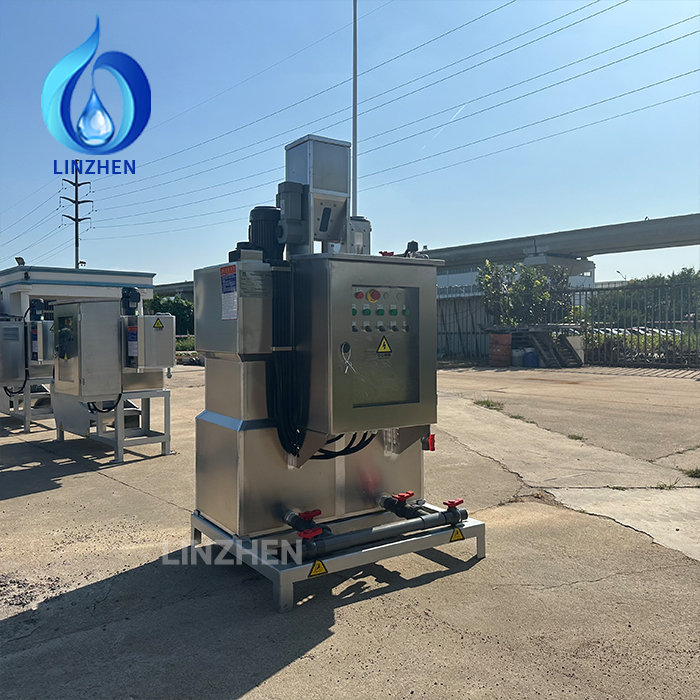
A thorough lifecycle financial assessment helps clarify the true cost of each germ-kill method option over a 10-year operational horizon. While chemical dosing represents a low-capital germ-kill method, recurring chemical purchases can exceed the long-term energy costs of a physical UV disinfection installation. Selecting a flexible, scalable germ-kill method protects small sewage treatment infrastructure against future regulatory updates while maintaining affordable operational expenses. Operators can also integrate an automatic chemical dosing system to streamline chemical management and maximize overall treatment performance.
FAQ
Which germ-kill method offers the best residual protection in sewage treatment?
Chemical disinfection, particularly chlorination, provides superior residual protection as treated water flows through discharge networks. When comparing chlorination vs UV, chlorine remains active to prevent microbial regrowth, making it a preferred germ-kill method when long discharge lines are present in a small sewage treatment network.
Can a small sewage treatment plant rely solely on physical UV disinfection?
Yes, UV disinfection serves as a standalone physical germ-kill method provided the final effluent maintains high optical clarity. Many small sewage treatment plants successfully utilize physical UV disinfection as their primary germ-kill method to avoid chemical storage regulations and chemical byproduct formation.
How does water clarity affect the selection of a germ-kill method?
Effluent turbidity significantly impacts physical UV disinfection efficiency because suspended solids block light transmission. If discharge clarity is low, chemical oxidation or membrane filtration is often selected as the primary germ-kill method to ensure consistent wastewater disinfection performance.
 EN
EN