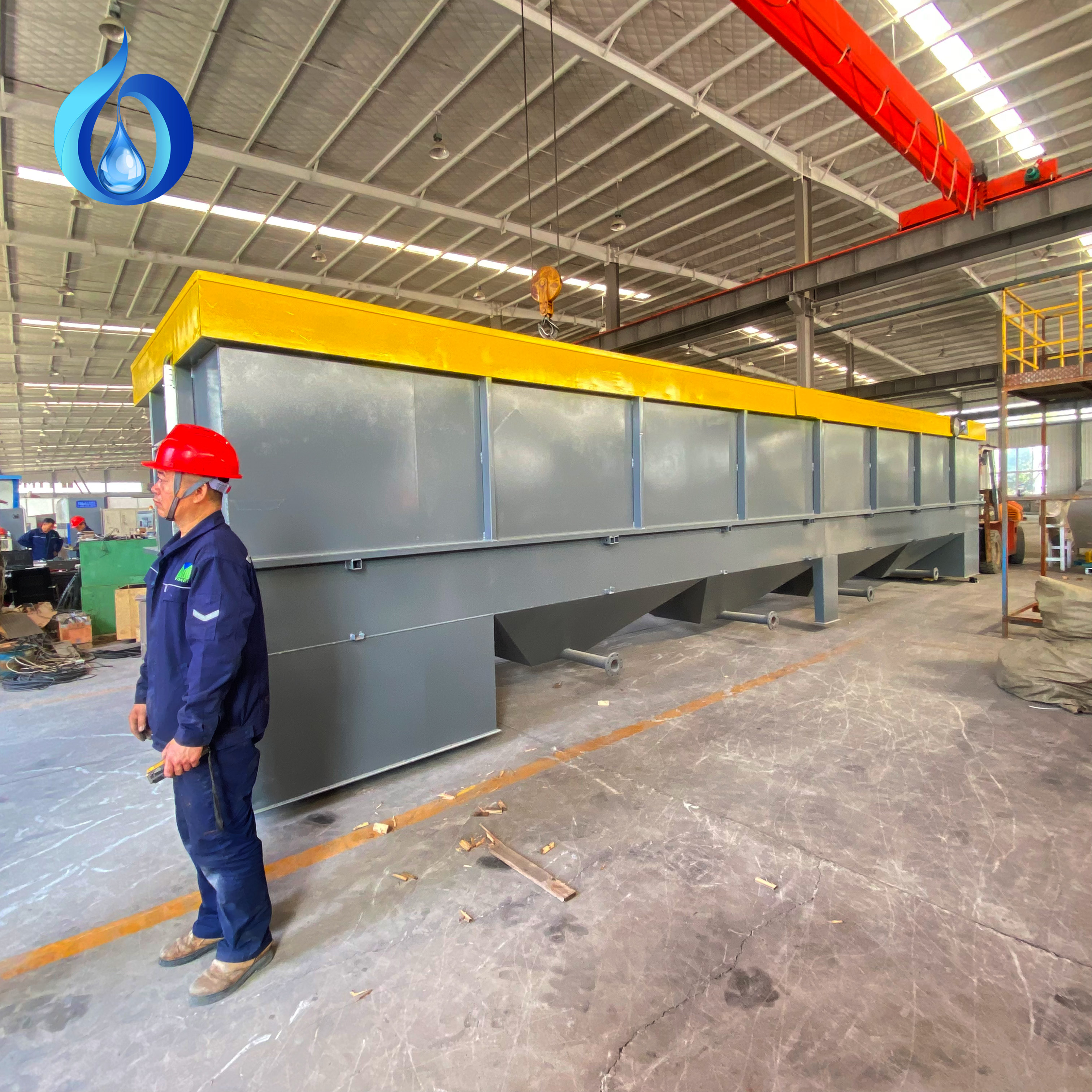
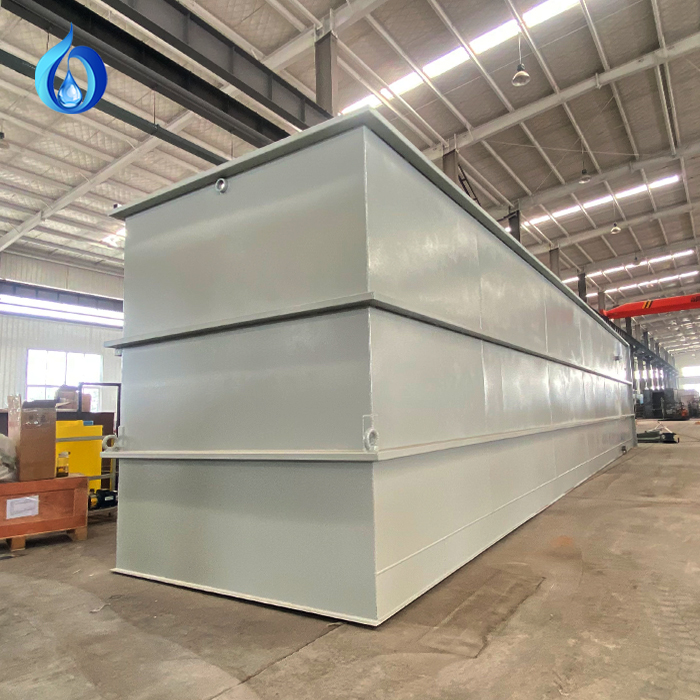
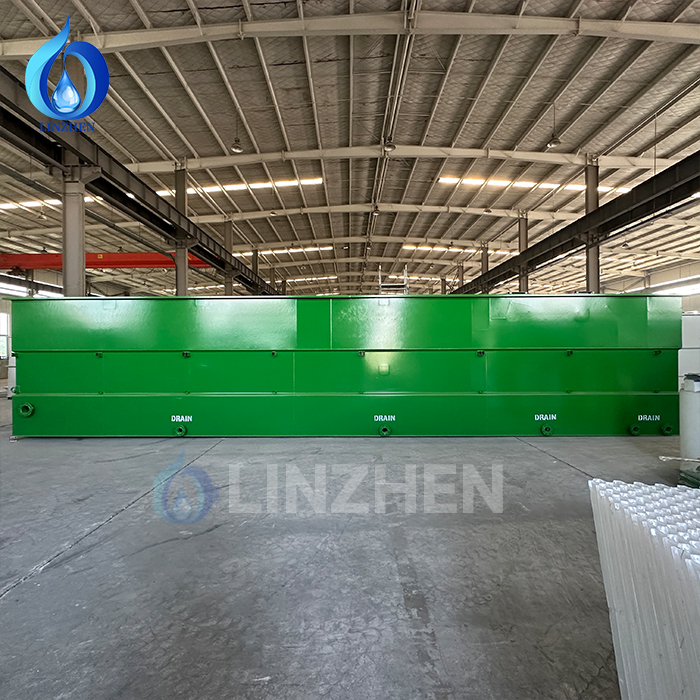
Industrial plants operate under constant pressure to optimize facility footprints while maintaining strict environmental compliance. Space limitations present one of the most significant operational challenges for manufacturing facilities, refineries, food processing plants, and chemical producers. Traditional wastewater treatment systems demand enormous land allocations, often consuming 30 to 50 percent of available facility real estate. MBR wastewater treatment represents a transformative approach that addresses this critical constraint by dramatically reducing the physical footprint required for effective treatment. This innovative technology combines biological treatment with membrane filtration, enabling industrial operators to achieve superior water quality within a dramatically smaller space envelope.
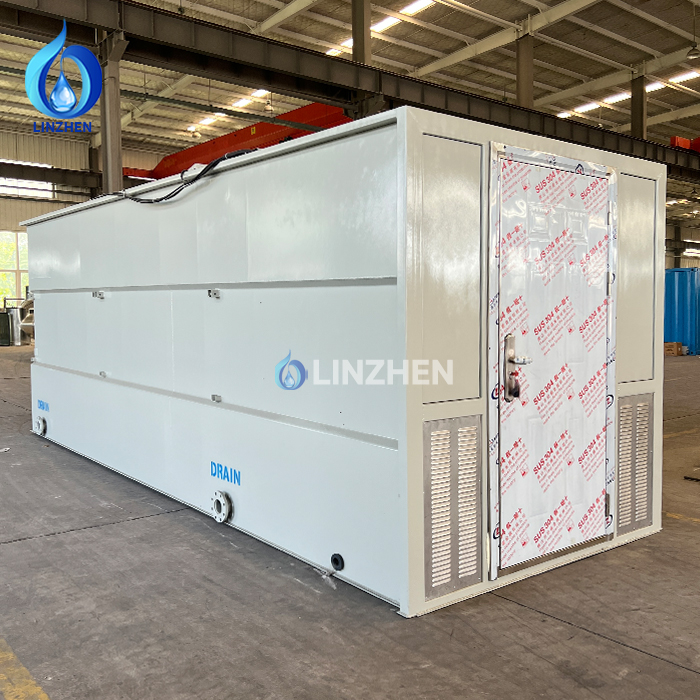
Understanding the space advantages that MBR wastewater treatment delivers is essential for facility managers evaluating treatment infrastructure investments. The compact nature of MBR wastewater treatment systems enables industrial operations to reclaim valuable land while improving treatment reliability and regulatory compliance outcomes. By exploring the specific spatial benefits, operational efficiencies, and economic advantages, industrial facility planners can make informed decisions about modernizing their wastewater treatment infrastructure.
Compact Footprint Design of MBR Wastewater Treatment Systems
High-Density Treatment Capability
MBR wastewater treatment achieves remarkable space efficiency through integrated biological and membrane processes within a single treatment train. Unlike conventional activated sludge systems that require multiple large settling basins, MBR wastewater treatment eliminates the need for separate secondary clarifiers by using ultrafiltration membranes to directly separate biomass from treated water. This integration reduces equipment count and physical layout requirements by 40 to 60 percent compared to traditional approaches. The membrane component of MBR wastewater treatment operates at higher mixed liquor suspended solids (MLSS) concentrations, typically 8,000 to 15,000 mg/L compared to 3,000 to 4,000 mg/L in conventional systems. This higher biomass density means MBR wastewater treatment reactors can treat equivalent wastewater volumes in significantly smaller bioreactor tanks, fundamentally changing facility layout optimization.
Vertical Space Utilization
MBR wastewater treatment systems leverage vertical engineering to maximize treatment capacity within confined areas. Membrane modules stack vertically within reactor vessels, and immersed membrane configurations allow treatment to occur in tall, narrow tanks rather than sprawling horizontal basins. Industrial sites with limited horizontal footprint but adequate vertical clearance find MBR wastewater treatment particularly advantageous for retrofit projects where land availability is severely constrained. The modular design of MBR wastewater treatment equipment permits staged installation and expansion without requiring extensive site rework. This vertical scalability means new production lines can be accommodated through incremental system enhancement rather than complete facility relocation.
Operational Benefits and Space Recovery
Eliminated Secondary Treatment Structures
Conventional wastewater treatment plants occupy substantial acreage due to the physical separation of treatment stages across multiple structures. Primary treatment tanks, aeration basins, clarifiers, filtration systems, and disinfection chambers each demand dedicated footprint. MBR wastewater treatment integrates these operations into a unified system, eliminating 15 to 25 separate treatment components. Industrial facilities implementing MBR wastewater treatment have reported recovering 35 to 50 percent of previously dedicated treatment land for productive manufacturing use. A textile mill that upgraded to MBR wastewater treatment reclaimed 2.3 acres formerly occupied by conventional treatment lagoons and clarifiers. This land recovery translates directly to operational cost reduction, revenue-generating capacity expansion, or environmental buffer zone creation without additional capital expenditure.
Reduced Storage and Equipment Requirements
MBR wastewater treatment demands minimal chemical storage infrastructure compared to conventional treatment methods. The biological processes within MBR wastewater treatment systems operate efficiently at lower residual chemical concentrations, reducing inventory and storage tank footprints. Sludge handling complexity decreases significantly because MBR wastewater treatment produces thickened solids that require less dewatering equipment and interim storage capacity. Traditional systems necessitate extensive clarifier banks, filtration galleries, and holding basins; MBR wastewater treatment accomplishes equivalent treatment performance through streamlined equipment arrangement. Industrial plants report 40 to 60 percent reduction in support infrastructure when transitioning to MBR wastewater treatment systems, translating to meaningful real estate savings and simplified operational logistics.
Cost and Regulatory Alignment Through Space Efficiency
Capital Investment Optimization
The reduced physical footprint of MBR wastewater treatment systems directly lowers site preparation, excavation, and construction expenses. Industrial facilities operating on expensive commercial or industrial real estate recognize substantial financial advantages from MBR wastewater treatment's compact design. Land acquisition costs, foundation work, and facility expansion expenses decline proportionally to space savings achieved through MBR wastewater treatment implementation. Retrofit projects leveraging existing industrial structures find MBR wastewater treatment particularly economical because spatial constraints that would necessitate relocation or expansion become manageable through efficient treatment concentration. The 30 to 40 percent reduction in total treatment facility footprint that MBR wastewater treatment provides translates into quantifiable capital preservation and accelerated project payback periods.
Regulatory Compliance and Environmental Benefits
Industrial sites increasingly face zoning restrictions and environmental buffer requirements that MBR wastewater treatment directly addresses through reduced spatial impact. Environmental agencies recognize that compact MBR wastewater treatment systems can achieve treatment objectives within limited areas while maintaining or exceeding discharge standards. The membrane filtration component of MBR wastewater treatment removes pathogens, suspended solids, and colloids with 99.9 percent efficiency, meeting stringent regulatory expectations for industrial effluent. Facilities operating near residential neighborhoods or in water-sensitive regions benefit from MBR wastewater treatment's ability to deliver compliance performance from minimized treatment infrastructure. This allows industrial operations to expand production capacity or modify site usage without triggering environmental review processes that horizontal treatment sprawl would trigger.
Implementation Considerations for Industrial Applications
Site Assessment and Design Customization
Successfully implementing MBR wastewater treatment requires thorough evaluation of existing site constraints, wastewater characteristics, and treatment objectives. Industrial facility managers must assess whether their specific contamination profile benefits optimally from MBR wastewater treatment architecture and whether space savings align with operational expansion priorities. Pre-treatment requirements, feedwater quality variability, and discharge destination standards influence how effectively MBR wastewater treatment addresses individual facility needs. Professional engineering consultation ensures MBR wastewater treatment system design maximizes space advantages while delivering reliable performance for particular industrial applications. Site-specific assessment prevents overestimating MBR wastewater treatment benefits for applications better served by alternative technologies.
Integration with Existing Infrastructure
MBR wastewater treatment retrofits into existing facilities require careful coordination with current operations to minimize production disruption. Industrial plants can implement phased MBR wastewater treatment upgrades, maintaining conventional treatment during transition periods while gradually shifting to membrane-based processes. Equipment manufacturers and system integrators specializing in MBR wastewater treatment provide installation support that minimizes facility downtime and ensures seamless operational handoff. The compact nature of MBR wastewater treatment systems facilitates installation within existing buildings or confined areas, enabling treatment infrastructure modernization without relocating production equipment or restructuring facility layouts.
FAQ
How much space does MBR wastewater treatment actually save compared to conventional systems?
MBR wastewater treatment typically occupies 35 to 50 percent less footprint than equivalent conventional treatment facilities. Space savings vary based on influent wastewater characteristics, treatment objectives, and site-specific factors, but industrial facilities consistently report recovering 25 to 60 percent of previous treatment real estate. The compact nature of MBR wastewater treatment reflects both reduced tank volume requirements and elimination of separate secondary treatment structures that conventional systems demand.
Can MBR wastewater treatment be installed in vertical configurations for space-constrained sites?
Yes, MBR wastewater treatment systems excel in vertical installations where horizontal space is severely limited. Immersed membrane configurations and modular bioreactor stacking enable MBR wastewater treatment to achieve treatment objectives within tall, narrow facility footprints. This vertical scalability makes MBR wastewater treatment particularly suitable for industrial retrofit projects where land availability constraints would prohibit conventional treatment system expansion.
What makes MBR wastewater treatment suitable for industrial facilities with limited expansion space?
MBR wastewater treatment delivers superior treatment performance from compact infrastructure that industrial sites can accommodate within existing boundaries. The integrated biological and membrane processes eliminate multiple treatment stages that conventional systems require, enabling industrial operations to handle increased wastewater volumes without proportional facility expansion. This capability makes MBR wastewater treatment ideal for manufacturing plants, refineries, and processing facilities where space represents a premium constraint and production growth demands treatment capacity expansion.
 EN
EN