Scaling a wastewater management system across multiple production lines represents one of the most critical operational challenges in modern manufacturing and industrial facilities. As production capacity expands, the volume and complexity of wastewater streams increase dramatically, requiring a thoughtfully engineered wastewater management system that can handle diverse inlet flows, variable contaminant concentrations, and dynamic operational demands. Organizations that successfully implement a scalable wastewater management system across their production infrastructure achieve significant cost savings, regulatory compliance, and environmental stewardship while maintaining operational flexibility and production efficiency.
Designing and deploying a wastewater management system that spans multiple production lines demands a comprehensive understanding of process integration, treatment capacity planning, and system architecture. Each production line generates distinct wastewater characteristics, flow rates, and pollutant profiles that must be consolidated into a unified treatment framework. The strategic approach to scaling a wastewater management system ensures that treatment efficiency remains high while capital expenditures and operational costs remain proportional to actual production volumes and environmental requirements.
Understanding Multi-Line Wastewater Integration Requirements
Consolidating Diverse Wastewater Streams
Multiple production lines typically generate wastewater with significantly different chemical compositions, suspended solids concentrations, and organic loads. A robust wastewater management system must incorporate pre-treatment stages that standardize inlet conditions before the primary treatment process begins. By installing individual collection points and screening systems at each production line, operators can monitor and adjust wastewater characteristics independently before streams merge into the centralized wastewater management system. This modular approach prevents any single production line from overwhelming the system and allows maintenance without disrupting the entire facility.
Flow Rate Variability and Storage Capacity
Industrial facilities rarely operate all production lines simultaneously at full capacity, creating variable flow rates that stress conventional wastewater management systems. A scalable wastewater management system incorporates equalization tanks that absorb peak flows during high-production periods and release stored wastewater during low-production intervals. This buffering capability allows the centralized treatment components to operate at consistent, optimal efficiency rather than cycling between extremes. Storage volume sizing directly influences both capital cost and treatment reliability, making accurate flow forecasting essential for designing the appropriate wastewater management system capacity.
Technical Architecture for Scaled Treatment Operations
Modular Treatment Train Design
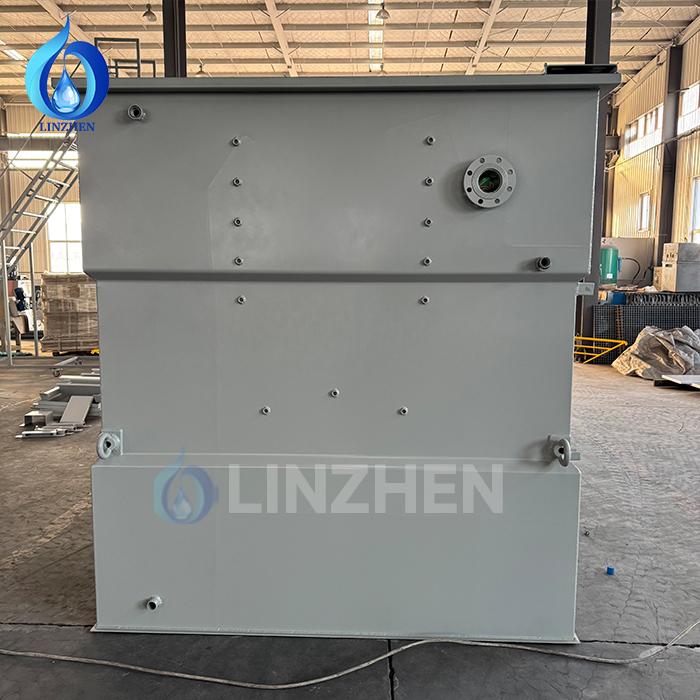
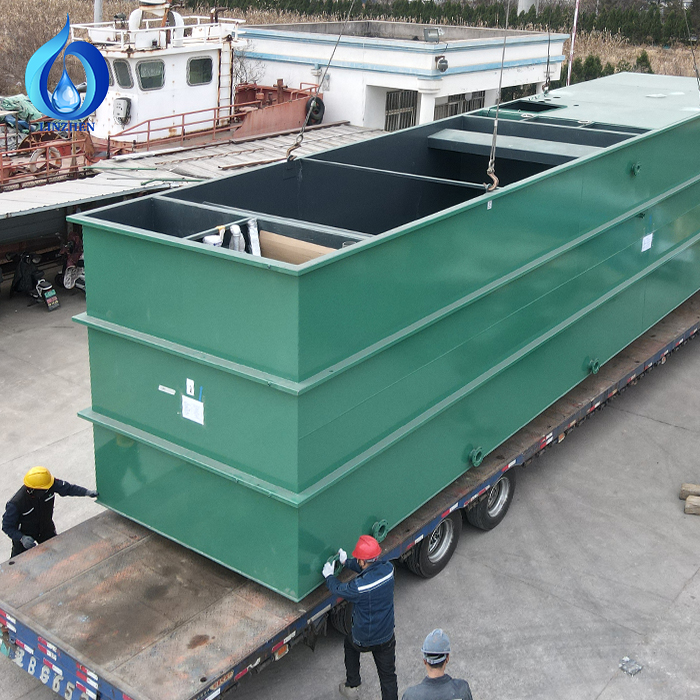
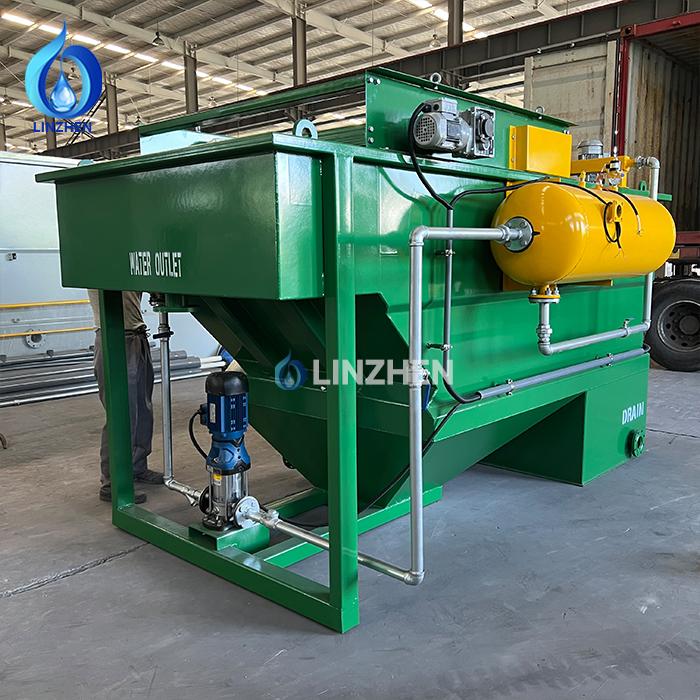
The most effective scaling approach implements a modular wastewater management system where individual treatment modules can be added or deactivated based on production demand. Settling tanks, biological reactors, filtration units, and disinfection systems are sized to handle baseline flows, with additional identical modules available for expansion. This parallel redundancy ensures that the wastewater management system maintains treatment standards even when individual modules require cleaning or maintenance. Modular architecture also simplifies troubleshooting since any deviation in treated water quality can be traced to specific process units rather than the entire wastewater management system.
Automated Monitoring and Control Infrastructure
Scaling a wastewater management system across multiple production lines necessitates sophisticated instrumentation and real-time process control. Automated sensors positioned throughout the wastewater management system continuously measure pH, dissolved oxygen, suspended solids, and biosolids concentration. These measurements feed into programmable logic controllers that adjust chemical dosing, aeration rates, and solids wasting to maintain optimal treatment conditions. When inlet characteristics change due to production line switching or process modifications, the wastewater management system control algorithms automatically compensate, reducing operator intervention and maintaining consistent effluent quality.
Operational Scaling and Performance Optimization
Load Balancing Across Treatment Units
A well-designed wastewater management system distributes inlet wastewater across multiple parallel treatment trains to balance hydraulic and organic loads. This design prevents bottlenecking where excessive flow concentration exceeds any single treatment unit's capacity. The wastewater management system includes flow distribution valves that automatically direct streams to the least-loaded treatment path, optimizing overall throughput. Load balancing also extends equipment lifespan by preventing sustained operation above design capacity, reducing maintenance frequency and unplanned downtime across the wastewater management system infrastructure.
Sludge Management Scaling Considerations
As a wastewater management system handles wastewater from multiple production lines, biosolids production increases proportionally, creating substantial handling and disposal challenges. An integrated wastewater management system must include thickening, dewatering, and potentially drying equipment sized to process the cumulative solids load. Advanced solids treatment within the wastewater management system, such as thermal hydrolysis or advanced anaerobic digestion, can reduce final disposal volume by 40 to 60 percent. Integrating solids management into initial planning ensures the wastewater management system delivers true lifecycle cost efficiency rather than simply shifting disposal burden downstream.
FAQ
What is the primary advantage of a centralized wastewater management system versus individual treatment for each production line?
A centralized wastewater management system achieves superior economies of scale, reducing capital and operational costs per unit volume compared to multiple small treatment plants. Centralization enables sophisticated treatment technologies that smaller individual systems cannot justify economically. The wastewater management system benefits from process redundancy, shared skilled staffing, and simplified regulatory reporting across the entire facility. Single-location treatment also concentrates environmental liability and simplifies monitoring compliance.
How does production line scheduling affect wastewater management system design?
Production scheduling directly determines the peak flow and contaminant loading that the wastewater management system must accommodate. If production lines operate consecutively rather than simultaneously, the wastewater management system can be sized for lower peak capacity while maintaining storage for intermediate flows. Conversely, simultaneous multi-line operation demands a wastewater management system with substantially higher treatment capacity. Early coordination between production planning and wastewater management system engineering ensures design parameters align with actual operational patterns.
Can an existing wastewater management system be expanded without complete replacement?
Many existing wastewater management systems can be expanded through phased capacity additions if original design included sufficient yard space and utility infrastructure. Adding parallel treatment modules, increasing tank volumes, and upgrading control systems allows incremental scaling without complete reconstruction. However, some wastewater management system designs lack expansion capacity, requiring evaluation by qualified engineers before proceeding. Retrofit costs often exceed new construction expenses, making early planning for future expansion critical when initially designing the wastewater management system.
 EN
EN