Municipal and industrial wastewater treatment infrastructure faces increasing pressure to balance operational efficiency with stringent environmental discharge standards. Two dominant biological treatment technology approaches stand out in modern process design: the MBBR system (moving bed biofilm reactor) and conventional activated sludge methods. Evaluating an MBBR system versus traditional activated sludge involves analyzing performance parameters, volumetric footprint, and lifecycle economics. While both rely on microbiological mass to consume organic loading, each biological treatment technology works through distinct physical mechanisms that dictate distinct operational performance.
A modern MBBR system blends attached-growth dynamics with fluid mixing benefits, representing an evolutionary step in wastewater engineering. In contrast, standard activated sludge options represent decades of historical application and baseline reliability. Deciding between an MBBR system and activated sludge requires examining hydraulic retention times, site spatial constraints, and long-term operating expenditures. This wastewater treatment comparison breaks down critical distinctions to guide technology selection for municipal upgrades and industrial facility expansions.
Operational Dynamics and Biomass Cultivation
How an MBBR System Operates
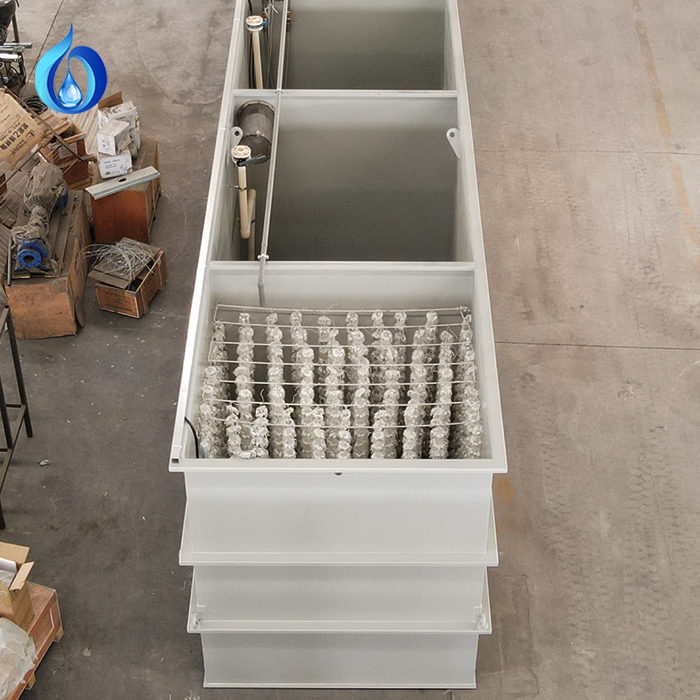
Inside an MBBR system, high-surface-area plastic carriers remain suspended inside aeration basins, forming a protected substrate for specialized biofilm growth. Air diffusion or mechanical mixers keep media suspended, facilitating continuous exposure between incoming substrates and attached microorganisms. This attached-growth setup enables an MBBR system to maintain elevated active biomass density within reduced basin volumes. Because biomass remains attached within the MBBR system, continuous sludge recycling becomes unnecessary, simplifying routine process control compared to suspended-growth alternatives.
Activated Sludge Process Fundamentals
Conventional activated sludge relies on unattached, free-floating microorganisms suspended in aeration basins. Secondary clarifiers positioned downstream separate target solids from clarified supernatant via gravity sedimentation. To sustain sufficient microbial populations, activated sludge configurations continually recycle settled biomass from clarifiers back into aeration zones. Managing sludge retention time and food-to-microorganism ratios requires active operator oversight, whereas an MBBR system relies on self-regulating attached biofilms that resist sudden biomass loss during hydraulic surges.
Performance Comparison and Treatment Capabilities
Organics and Contaminant Removal Efficiency
An MBBR system provides high volumetric loading rates, routinely reaching biological oxygen demand reduction rates above 95 percent. The structured biofilm layers inside an MBBR system promote specialized microbial zones, allowing simultaneous carbon oxidation and nitrification. While activated sludge yields high-quality effluent under stable influent conditions, an MBBR system offers superior resilience when processing high-strength industrial streams or handling temporary loading spikes.
Footprint Demands and Spatial Optimization
Site spatial requirements often drive biological treatment technology selection. An MBBR system uses 40 to 60 percent less basin volume than traditional activated sludge systems designed for equivalent hydraulic capacity. This volumetric advantage reduces civil construction costs and makes an MBBR system exceptionally well-suited for tight municipal footprints or plant retrofits where land acquisition is cost-prohibitive.
Economic Evaluation and Lifecycle Expenditures
Capital Investments and System Setup
Initial capital outlay for an MBBR system is often 15 to 25 percent lower than equivalent activated sludge plants due to smaller tank footprints and eliminated return sludge pumping lines. Modules within an MBBR system allow scalable upgrades, enabling facilities to add carrier media as influent loads grow without building new concrete tanks.
Operating Expenditures and Energy Demands
Energy demands between an MBBR system and activated sludge remain comparable. However, an MBBR system eliminates continuous secondary sludge recirculation energy, lowering auxiliary power consumption. While activated sludge requires ongoing clarifier maintenance and heavy sludge handling, an MBBR system relies on durable carrier media requiring minimal structural intervention over long operational cycles.
Environmental Compliance and System Resilience
Nutrient Removal Performance
Achieving strict effluent total nitrogen and phosphorus limits requires targeted nutrient removal efficiency. An MBBR system accommodates alternating anoxic and aerobic zones within compact footprints, delivering nitrogen removal efficiency over 80 percent. Conventional activated sludge can reach similar compliance levels but typically demands larger multi-stage basins and complex recycle loops.
Handling Variable Influent Loads
Influent shock loads present operational risks to biological facilities. The fixed biofilm in an MBBR system prevents biomass washout during sudden flow spikes. Suspended biomass in activated sludge systems remains susceptible to settling issues and biomass loss, making an MBBR system a robust option for facilities facing volatile influent conditions.
FAQ
What is the main benefit of an MBBR system over activated sludge?
The primary advantage of an MBBR system is its compact footprint, utilizing 40 to 60 percent less basin volume than activated sludge while offering robust resistance to loading shocks through attached-growth biofilms.
Can an existing activated sludge plant convert to an MBBR system?
Yes. Existing activated sludge basins can be retrofitted into an MBBR system by integrating carrier media and retention screens, expanding treatment capacity without requiring new concrete structures.
Which option demands less day-to-day maintenance?
An MBBR system requires less daily operator oversight than activated sludge because it eliminates return sludge pumping, clarifier management, and complex sludge volume index tracking.
 EN
EN