Managing budget constraints in modern industrial and municipal facilities requires continuous scrutiny of recurring operational expenses. Among these operational expenditures, wastewater treatment chemical dosing ranks as one of the largest continuous financial burdens, routinely competing with power consumption for the top cost driver. Fluctuating chemical markets, coupled with varying influent streams, create an urgent necessity for facility leaders to optimize wastewater treatment chemical dosing routines. Achieving intelligent wastewater treatment chemical dosing reductions enables plant managers to maximize efficiency without putting discharge compliance or operational integrity at risk.
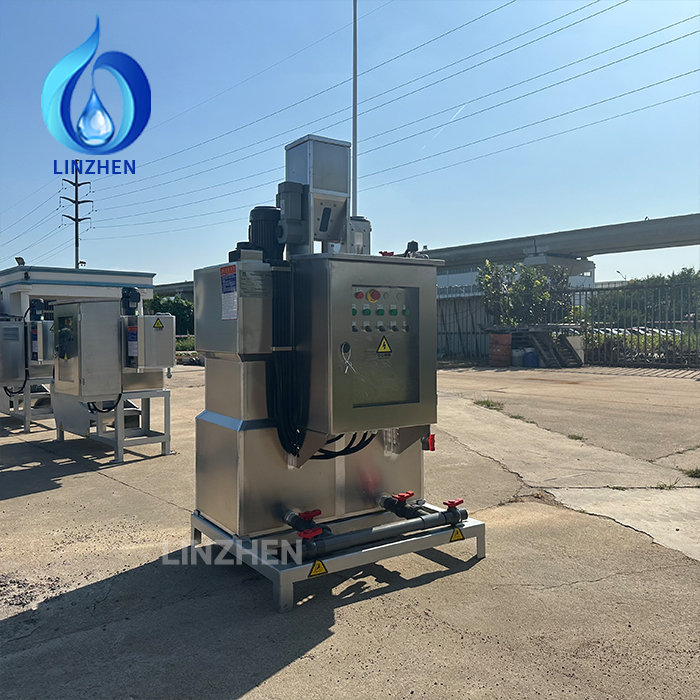
Conventional static or manual wastewater treatment chemical dosing methods frequently depend on high safety margins to accommodate unpredictable influent quality variations. Consequently, plants frequently suffer from severe over-dosing, wasting expensive chemical reagents while producing excessive chemical sludge that increases downstream handling expenses. Transitioning toward precise wastewater treatment chemical dosing methodologies gives facilities a structured pathway to eliminate reagent waste, control operational expenditures, and secure predictable effluent quality.
Real-Time Monitoring and Adaptive Wastewater Treatment Chemical Dosing
Continuous Water Quality Data Acquisition
The foundation of successful wastewater treatment chemical dosing optimization relies on high-resolution, real-time data collection across every treatment stage. Installing inline analytical sensors—measuring parameters like pH, turbidity, oxidation-reduction potential (ORP), and total suspended solids (TSS)—allows automated controllers to calculate optimal wastewater treatment chemical dosing requirements instantaneously. Rather than relying on rigid dosing schedules, an adaptive wastewater treatment chemical dosing framework scales chemical delivery dynamically to handle actual organic load and hydraulic flow changes in real time.
Deploying responsive wastewater treatment chemical dosing algorithms prevents chemical waste during low-load operating periods while guaranteeing sufficient treatment during peak surge conditions. Plant operators adopting real-time wastewater treatment chemical dosing controls regularly achieve immediate consumption cuts ranging from 15 to 30 percent. The resulting operational savings typically offset sensor installation costs and control infrastructure investments within 24 to 36 months, delivering ongoing economic dividends for the facility.
Closed-Loop Feedback and Predictive Controls
Incorporating closed-loop feedback mechanism controls provides a continuous safety net for automated wastewater treatment chemical dosing systems. By constantly comparing final effluent parameters against initial feed settings, the control network dynamically fine-tunes ongoing wastewater treatment chemical dosing rates. If downstream sensors detect residual over-dosing, the automated system immediately dials back wastewater treatment chemical dosing volumes, keeping operations balanced and efficient.
Advanced wastewater treatment chemical dosing platforms also incorporate predictive modeling and machine learning to anticipate water quality fluctuations before raw influent hits main reaction tanks. By analyzing historical flow patterns and seasonal trends, these smart controllers proactively adjust wastewater treatment chemical dosing rates, maintaining process stability and preventing over-correction spikes during rapid weather or production changes.
Reagent Selection and Pre-Treatment Wastewater Treatment Chemical Dosing Strategies
Evaluating Chemical Selection and Reagent Formulas
Facilities frequently maintain historical wastewater treatment chemical dosing protocols long after process dynamics or market options have evolved. Performing thorough chemical audits allows technical teams to evaluate whether current coagulant, flocculant, or neutralizing agent selections represent the most economical solutions. Tailoring polymer charge densities and molecular weights to specific wastewater profiles can drastically boost reaction kinetics, allowing lower overall wastewater treatment chemical dosing volumes to achieve equivalent solid-liquid separation.
Re-evaluating chemical specifications also uncovers opportunities to switch from premium proprietary blends to cost-effective standardized compounds without sacrificing process output. Re-bidding reagent contracts and running jar testing trials routinely demonstrates that updating your wastewater treatment chemical dosing mix yields dramatic performance improvements and lower overall cost per volume treated.
Upstream Pre-Treatment Improvements
Optimizing preliminary physical removal stages directly lightens the burden placed on downstream wastewater treatment chemical dosing routines. Efficient coarse screens, hydrocyclones, and primary settling basins trap heavy particulate solids mechanically before chemical addition begins. Enhancing these preliminary separation units ensures that downstream wastewater treatment chemical dosing is reserved exclusively for dissolved pollutants and micro-flocs, maximizing chemical efficiency.
When pre-treatment hardware captures 30 to 40 percent more suspended solids upstream, the downstream wastewater treatment chemical dosing requirement drops proportionally. Elevating physical pre-treatment efficiency provides one of the most reliable strategies for achieving lasting wastewater treatment chemical dosing cost reductions across the entire plant lifecycle.
Operational Best Practices for Wastewater Treatment Chemical Dosing Control
Standardized Protocols and Team Training
Technological upgrades must be supported by disciplined operating procedures to sustain wastewater treatment chemical dosing savings. Providing operators with comprehensive training regarding reaction dynamics, stoichiometry, and target parameters ensures staff understand how accurate wastewater treatment chemical dosing directly drives operational solvency. When technicians recognize the downstream costs of over-dosing, they become active guardians of chemical efficiency.
Establishing standardized shift handoff logs and continuous usage tracking builds clear accountability into everyday operations. Documenting actual wastewater treatment chemical dosing volumes against baseline targets enables plant managers to spot operational anomalies early, preventing minor process drifts from inflating monthly chemical expenses.
Instrument Maintenance and Pump Calibration
Accurate analytical measurements depend entirely on well-maintained sensors and dosing hardware. Fouled probes or uncalibrated meters feed incorrect readings into control systems, resulting in severe wastewater treatment chemical dosing errors. Implementing systematic cleaning schedules, sensor recalibrations, and electrode replacements guarantees that automated wastewater treatment chemical dosing adjustments reflect genuine process conditions.
Chemical metering pumps and feed lines require identical preventive maintenance. Worn pump diaphragms or scale-clogged discharge lines alter delivery volumes, disrupting designed wastewater treatment chemical dosing ratios. Routine pump calibration checks protect against volumetric drift, keeping automated wastewater treatment chemical dosing systems performing reliably day after day.
FAQ
What overall savings can facilities expect from wastewater treatment chemical dosing optimization?
Implementing a modern wastewater treatment chemical dosing optimization program typically yields chemical cost reductions between 20 and 40 percent. Actual savings depend on baseline dosing efficiency, automation levels, and operator engagement. Plants transitioning away from manual, uncalibrated wastewater treatment chemical dosing routines consistently experience rapid return on investment, often achieving payback within 12 to 36 months.
Does reducing wastewater treatment chemical dosing put regulatory compliance at risk?
No, proper wastewater treatment chemical dosing optimization actually improves overall discharge stability and compliance consistency. By replacing arbitrary over-dosing with dynamic feed adjustments tailored to real-time water conditions, automated wastewater treatment chemical dosing prevents chemical carryover and produces far more consistent effluent quality while reducing total chemical consumption.
Facilities using automated real-time sensors and feedback controls see measurable reductions in wastewater treatment chemical dosing within two to four weeks as systems adapt to influent patterns. Standardizing operator routines yields additional savings within months, while comprehensive upgrades involving pre-treatment equipment deliver maximum wastewater treatment chemical dosing efficiency within six to twelve months.
 EN
EN